



Blog

All Hammond Jeep Dealer Hammond RAM Dealer Awards Hammond CDJR Dealer Hammond CDJR Financing Hammond Dodge Dealer Hammond Jeep Financing Hammond Jeep Service Center Hammond Truck Dealer
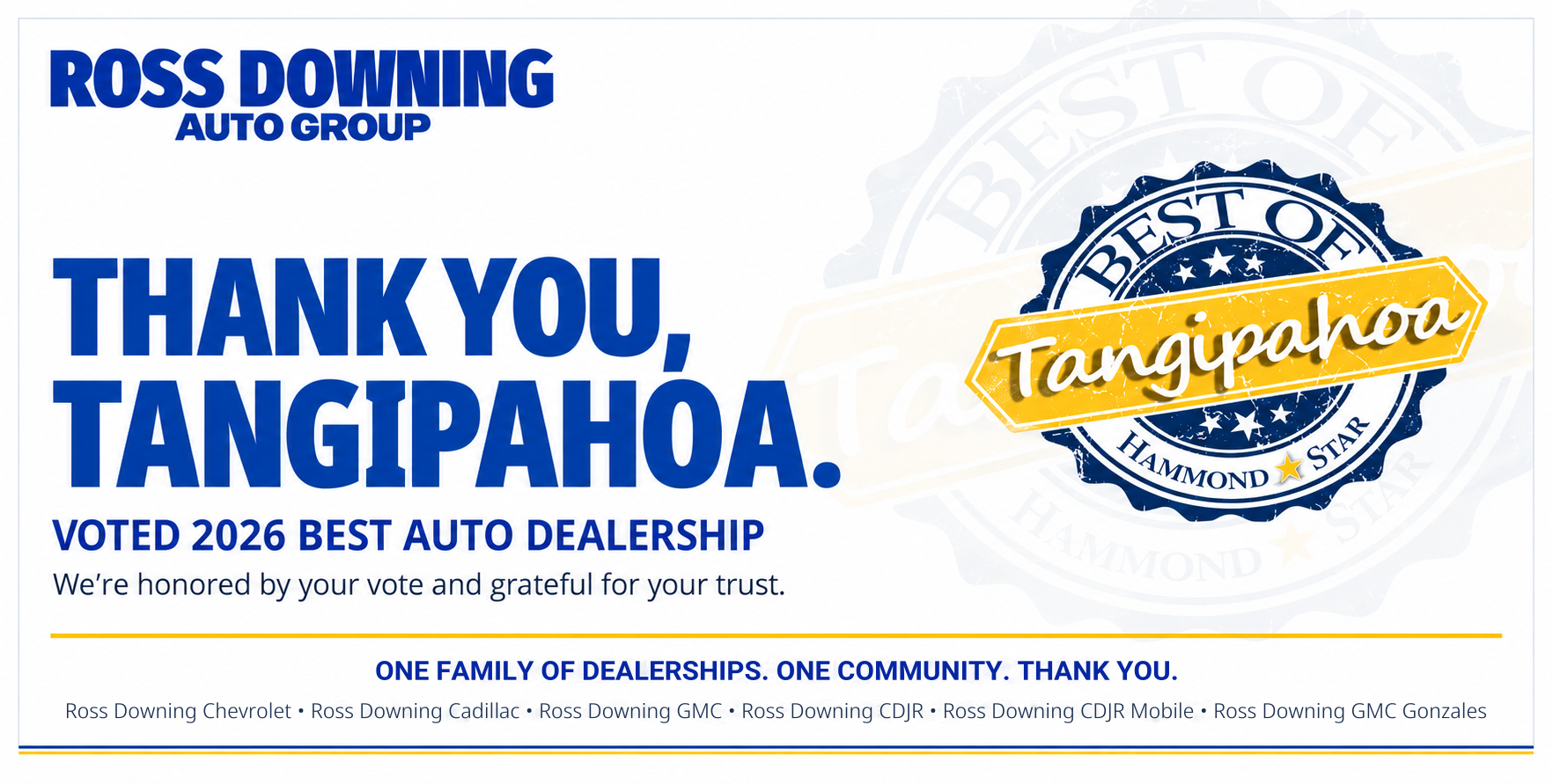
Thank You, Hammond: Ross Downing CDJR Celebrates Best of Tangipahoa
in Awards

Thank You, Hammond: Ross Downing CDJR Celebrates Best of Tangipahoa

Thank You, Hammond: Ross Downing CDJR Celebrates Best of Tangipahoa Ross Downing was voted 2026 Best Auto Dealership in the Hammond Daily Star's Best of Tangipahoa, and our Chrysler, Dodge, Jeep and Ram team in Hammond is proud to be part of it. To every Jeep, Ram, Dodge and Chrysler owner who voted for us: thank you. Whether you came in for a new Ram 1500, a trade-in or a quick service visit, you're the reason for this award. Our team at 500 Westin Oaks Dr. works every day to earn that trust with straight answers, fair deals and service done right the first time. That's how the Ross Downing family has done business in Hammond since 1973. Read the full story from Ross Downing, or stop by and say hello. Ross Downing CDJR Hammond, 500 Westin Oaks Dr., Hammond, LA 70403 Shop and schedule service online or call (985) 215-8605.

Read More
Used Car Financing in Louisiana and Fair Trade In Values

Used Car Financing in Louisiana and Fair Trade In Values

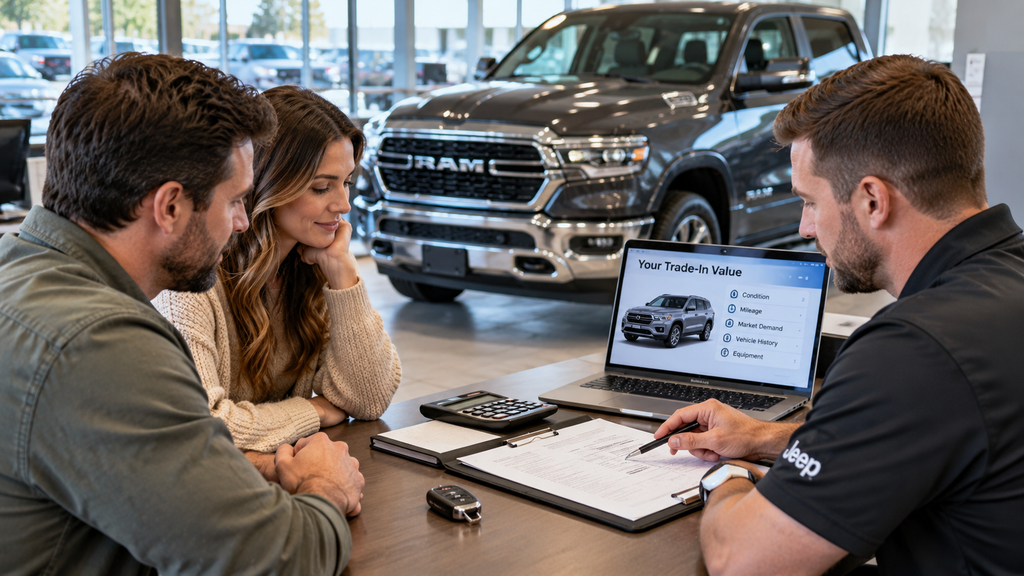
Used car financing in Louisiana becomes easier to review when the trade value and loan payoff remain separate. A clear appraisal gives you the vehicle value before financing starts. Therefore, you can see how equity changes the next loan amount. You can also compare the appraisal with outside research without mixing unrelated numbers. How a Trade Appraisal Establishes Vehicle Value How does a dealership establish a trade in value? A trade appraisal reviews the exact vehicle, its condition, mileage, equipment, and current market data. Therefore, the appraiser starts with the VIN, trim, and odometer before inspecting the vehicle itself. Mileage gives the appraiser one reference point. However, condition can move the number in either direction. Paint damage, worn tires, warning lights, interior wear, and mechanical concerns can all require reconditioning before resale. Installed equipment also matters because two vehicles from the same model year may not share the same specification. In addition, local demand can change what similar vehicles are bringing in the region. Used car financing in Louisiana should begin with a trade value that stands on its own. The appraisal should not change simply because the payoff is high or low. Instead, the vehicle value should come from the vehicle and the market around it. Before the appraisal, gather the details that define the vehicle: more Confirm the VIN, trim, mileage, major factory equipment, and any later modifications before the inspection begins. Point out known mechanical or cosmetic concerns so the appraiser can review them directly. Bring service records when they document recent maintenance, major repairs, or replacement parts. As a result, the appraisal has a clearer factual starting point. Why Online Estimates and Physical Appraisals Can Differ Why can an online estimate differ from an in person appraisal? Online tools rely on submitted details and market data, while the physical review checks the actual vehicle. An estimate may assume a certain condition level. However, an appraiser can see tire wear, body damage, interior wear, warning lights, or missing equipment. Those findings can change the final number. The reverse can also happen. A vehicle may show better condition than the owner expected. In addition, strong local demand can support a different market result than a broad online estimate. Used car financing in Louisiana works better when the online estimate serves as a reference point. It should not be treated as a guaranteed offer. Therefore, compare the assumptions behind each number. Check mileage, trim, options, condition, and location before deciding whether two figures truly conflict. Ross Downing CDJR offers a Value Your Vehicle tool for appraisal preparation. It asks for year, make, model, trim, mileage, payoff, options, and condition. A clear appraisal conversation should explain why the final number differs from an estimate. Therefore, you can judge the reasoning instead of focusing only on the difference. Separate Trade Value From Loan Payoff Does owing money on the vehicle reduce its trade value? No. The payoff changes your equity position, while the appraisal reflects what the vehicle is worth. The calculation is simple. Trade value minus current payoff equals your equity position. Therefore, a vehicle worth more than the payoff has positive equity. A vehicle worth less than the payoff has negative equity. This distinction matters during used car financing in Louisiana because equity changes the next amount financed. Positive equity can reduce the amount you need to borrow. Negative equity can increase it if the remaining balance enters the new contract. Review the numbers in this order: Start with the trade value before discussing the current loan balance. Verify the lender payoff using a current payoff amount instead of an old monthly statement. Subtract the payoff from the trade value to see the equity position before reviewing the next loan. Instead, avoid folding every figure into one monthly payment discussion. The trade amount, payoff, and next loan each answer a different question. If negative equity enters the next loan, the amount financed rises. As a result, interest may apply to a larger balance. Therefore, review that amount before choosing a term or monthly payment. Bring the Information That Supports a Clear Appraisal What should you bring before getting a trade appraisal? Bring the ownership and loan information that lets the dealership verify the vehicle and payoff. Registration can confirm ownership details. In addition, lender information gives the finance team a path to request the current payoff. A payoff quote matters because the balance can change as interest accrues or payments post. Service records can also add context. They do not guarantee a higher trade value. However, they can document recent maintenance, repairs, tires, or other work that the appraiser should know about. Used car financing in Louisiana may move faster when the trade information is complete before the finance discussion begins. Therefore, gather the following items before your appointment: Bring the current registration, lender name, account information, and any recent payoff quote you already have. Bring both key fobs, service records, and information about major repairs or modifications. Remove personal items so the cabin and cargo areas are ready for a complete inspection. Ross Downing CDJR also provides a finance center for customers reviewing loan options after the appraisal. Keeping the trade documents together makes the next step easier to review. Keep the Trade and Financing Numbers Separate What should a transparent trade conversation show you? It should show the appraisal, payoff, equity, purchase price, fees, and financing terms as separate figures. That separation makes the transaction easier to follow. Therefore, you can see whether a change came from the trade, the vehicle price, the loan structure, or another charge. Used car financing in Louisiana should not require you to reverse engineer the trade value from a monthly payment. Instead, ask to see the core numbers individually before discussing the final payment. Start with the trade amount. Then confirm the payoff and resulting equity. After that, review the next vehicle price, taxes, fees, down payment, amount financed, APR, and loan term. The monthly payment comes from those inputs. As a result, a lower payment can come from a longer term even when the amount financed stays high. Looking at every figure keeps the trade conversation focused on the actual appraisal. A fair process does not promise that every outside estimate will match the final offer. Instead, it gives you a clear explanation for the number and shows how that number enters the next transaction. Review the appraisal first, verify the payoff second, and examine financing after the equity position is clear.
2025 Jeep Gladiator for Sale Work or Weekend Guide

2025 Jeep Gladiator for Sale: Work or Weekend Guide

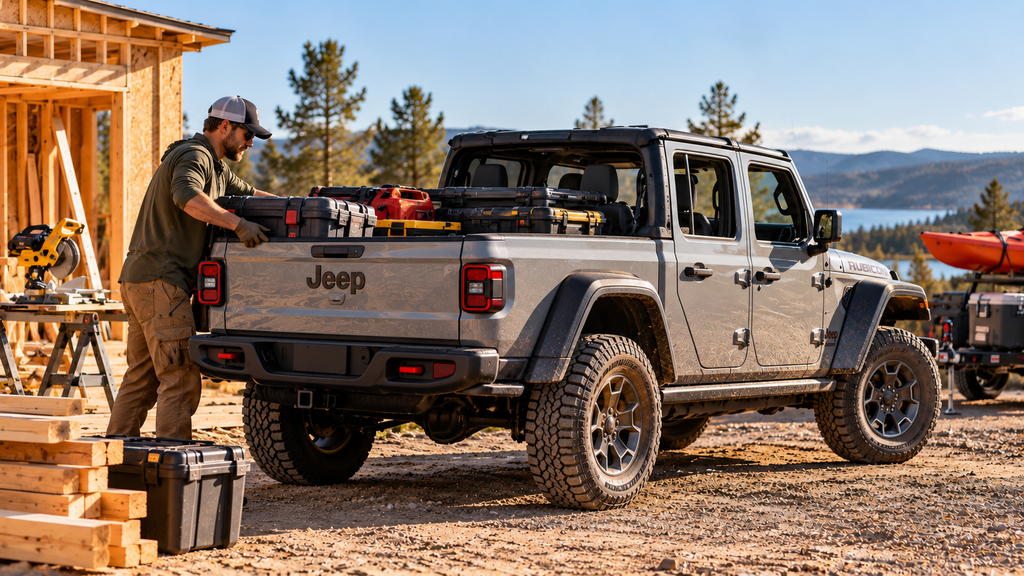
A 2025 Jeep Gladiator for sale can make sense for work, weekends, or a mix of both. The key is matching the truck to what you carry, tow, and do each week. Therefore, start with the bed, payload, trailer needs, and cabin space before focusing on trim names. That approach gives you a clearer way to judge whether the Gladiator fits your routine. Use the Five Foot Bed as the First Work Test Is the Gladiator bed useful enough for real work? The five foot steel bed gives you open cargo space for tools, bins, muddy gear, and smaller materials. Therefore, it works best when your cargo fits the bed without needing a longer pickup box. The bed measures about 60.3 inches long and includes tie down points for secured loads. In addition, the open bed keeps dirty gear away from seats and carpet. That can matter for landscaping tools, recovery gear, coolers, work boots, or jobsite supplies. A 2025 Jeep Gladiator for sale should be judged by cargo shape as much as cargo weight. Long lumber, ladders, or oversized equipment may need racks, supports, or a trailer. However, toolboxes, bins, smaller equipment, and recreation gear can fit the bed with fewer compromises. Before choosing the Gladiator for work, consider three cargo questions. more Measure your longest regular cargo item and compare it with the five foot bed before you shop. Add the weight of tools, passengers, and bed cargo so you can compare that total with the truck's payload rating. Decide whether wet or dirty gear belongs in an open bed or needs enclosed storage during your normal week. Therefore, the bed is neither too small nor large enough by default. Its fit comes from the size, weight, and weather needs of what you carry. Separate Payload From Towing How much work can the Gladiator carry or pull? Payload covers the weight carried by the truck, while towing covers a trailer connected behind it. Therefore, those numbers answer different questions and should be checked separately. In addition, current Gladiator specifications list up to 1,720 pounds of four wheel drive payload on a properly equipped Sport S. That total includes people and cargo carried by the truck. As a result, four adults, tools, and bed cargo all use part of the same payload allowance. Towing follows another set of limits. A properly equipped Gladiator can reach up to 7,700 pounds of gas towing. However, the rating changes with trim, equipment, axle setup, and other factory details. For a 2025 Jeep Gladiator for sale, do not use the highest advertised number as the rating for every truck. Instead, verify the exact configuration before planning trailer weight. The vehicle label, factory equipment, hitch setup, and trailer requirements should all agree. Ross Downing CDJR lists current new Jeep inventory, including Gladiator models when available. You can compare trims and equipment before checking the exact payload and towing figures for a specific truck. Therefore, a contractor pulling a small utility trailer faces a different decision from someone carrying tools only. The same is true for a boat owner, camper, or homeowner hauling weekend supplies. Match the Gladiator to the Job You Do What kinds of work fit the Gladiator well? Jobs that need four doors, an open bed, four wheel drive, and moderate trailer use are a natural match. Therefore, the truck can serve people who split time between paved roads, rough access roads, and lighter hauling. The crew cab gives you a rear seat for coworkers, family, or gear you want kept inside. In addition, the bed separates dirty cargo from the cabin. That combination can suit technicians, property managers, landscapers, photographers, survey crews, and small business owners with lighter equipment. A 2025 Jeep Gladiator for sale may fit poorly when your week centers on long materials. Very heavy trailers may also point elsewhere. Therefore, your regular cargo should guide the body style before styling or trim preference. Daily access also matters. Four wheel drive and ground clearance can be useful on gravel, mud, or rough jobsite approaches. However, the Gladiator still needs to fit parking spaces, garages, and the roads you use most. Use the truck around the tasks you repeat every week. If you carry compact equipment, dirty gear, and a smaller trailer, the layout can work well. If you haul long material every day, measure first and compare another pickup layout before deciding. Use the Same Truck for Weekend Gear and Trails What makes the Gladiator appealing after the workweek ends? It keeps Jeep traits such as removable roof options and four wheel drive while adding a pickup bed. Therefore, the same cargo area that carries tools can carry bikes, camping gear, fishing equipment, or lake supplies. The open bed also changes how you pack for outdoor trips. Muddy boots, wet coolers, firewood, and bulky gear can stay outside the cabin. In addition, tie down points give you a way to secure items before leaving pavement. Furthermore, trim choice matters here. Rubicon models focus more heavily on technical trail equipment. Mojave models place more emphasis on higher speed desert terrain. Therefore, the trim should reflect the type of off pavement driving you plan to do. Ross Downing CDJR's new vehicle inventory currently includes Gladiator models in multiple trims. A side by side review can show how tires, suspension hardware, towing equipment, and cabin features change across the lineup. A 2025 Jeep Gladiator for sale does not have to be a work truck or a weekend truck. It can handle both roles when the cargo, towing, and trail demands stay within the truck's published limits. Compare Gladiator and Wrangler by What You Carry When does a Wrangler make more sense instead? A 2025 Jeep Gladiator for sale uses an open bed, while Wrangler keeps cargo enclosed. Therefore, weather protection and cargo type can settle the choice faster than styling. A Wrangler can be a strong fit when passengers and enclosed storage come first. Bags, groceries, electronics, and travel gear stay behind doors and glass. By contrast, the Gladiator gives you a separate area for dirty, wet, tall, or awkward items. The trailer question can also separate them. Current Gladiator configurations can reach a higher maximum tow rating than a 2025 four door Wrangler. However, each exact vehicle still needs its own rating checked before towing. Ross Downing CDJR also carries Jeep Wrangler models. That gives shoppers a direct way to compare both body styles. If your week includes tools, muddy gear, outdoor equipment, or regular trailer use, the Gladiator's bed adds useful separation. If enclosed cargo matters more, the Wrangler may fit your routine better. Therefore, choose around what you carry most days, where you drive, and how much trailer weight you plan to move.

2026 Ram 1500 Hemi for Sale Near Me eTorque System Guide

2026 Ram 1500 Hemi for Sale Near Me: eTorque System Guide

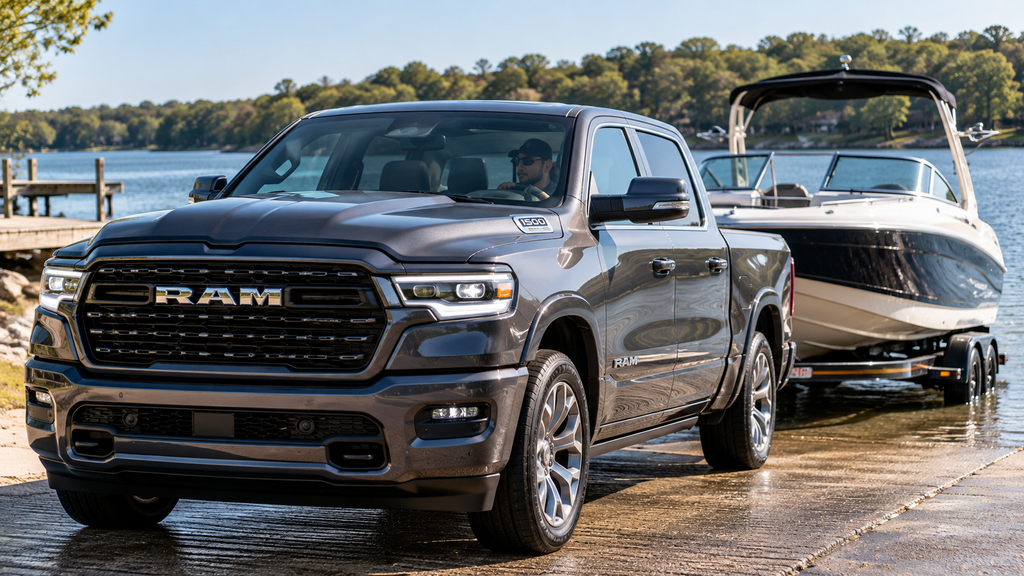
A 2026 Ram 1500 Hemi for sale near me may include eTorque, which changes more than the charging setup. The hardware can restart the engine, recover energy, and add brief torque at low speed. Therefore, understanding the parts makes the truck easier to evaluate before a test drive. It also gives used Ram shoppers better questions for service records and road testing. What Hardware eTorque Adds to the Ram 1500 What parts does eTorque add to a Ram 1500? The setup adds a belt driven motor generator, a 48 volt battery, and power conversion hardware. Together, those parts recover energy and return it when the truck needs electrical assistance. The motor generator sits at the front of the engine and connects through the accessory belt. Therefore, it can spin the engine during restart events and generate electricity while the truck slows. It also takes over the charging role normally handled by a conventional alternator. In addition, the 48 volt battery stores the recovered electrical energy. However, the truck still uses a normal 12 volt electrical side for many accessories. A converter moves power between the two voltage levels so both sides can work together. For a 2026 Ram 1500 Hemi for sale near me, these parts support the 5.7L HEMI V8. Earlier Ram 1500 trucks also paired eTorque with the 3.6L Pentastar V6. Therefore, shoppers should confirm the exact engine before comparing two trucks with the same eTorque badge. Before a test drive, verify three hardware details: more Confirm the engine listed on the window sticker or vehicle record before comparing torque figures. Ask whether the 48 volt battery or motor generator has received prior service or replacement. Listen for warning messages or unusual restart response during several stop and start events. In addition, these checks give the feature a mechanical context. They also make service records easier to read later. How eTorque Adds Low Speed Torque Where does the added torque come from? The motor generator applies brief assistance through the belt and crankshaft during selected low speed events. Therefore, the gasoline engine does not carry every part of the launch by itself. Ram lists different supplemental torque figures for different engines. The 3.6L V6 can receive up to 90 pound feet from eTorque. The 5.7L HEMI V8 can receive up to 130 pound feet during initial throttle input. Those numbers do not become permanent additions to the published engine torque rating. Instead, the electric motor contributes during short moments when extra crankshaft assistance is useful. Therefore, the driver may notice a smoother response when moving away from a stop. The same idea can support transmission operation. The motor generator can add or remove small amounts of torque as the transmission changes gears. That action can make power delivery feel less abrupt during low speed driving. A 2026 Ram 1500 Hemi for sale near me should be judged by how the complete truck responds. In addition, engine choice, axle ratio, drivetrain, tire size, and loaded weight still shape acceleration. Therefore, eTorque is one part of the launch response, not a replacement for the engine. What eTorque Changes When the Truck Is Towing Does eTorque increase the Ram 1500 tow rating by itself? No. Maximum towing depends on the complete truck configuration, including drivetrain, axle ratio, cab, bed, and installed equipment. eTorque can still matter when a loaded truck starts moving. The motor generator can add brief crankshaft torque as the driver applies the throttle. Therefore, the gas engine receives electrical assistance during the first part of the launch. That assistance does not change the need to follow the truck's published tow rating. A properly equipped 3.6L eTorque Ram 1500 can carry a different rating than a HEMI truck. Four wheel drive and two wheel drive configurations can also carry different limits. When comparing trucks for towing, review these items together: Check the exact tow rating for the VIN and equipment package instead of relying on engine name alone. Review axle ratio, drivetrain, cab, bed, hitch equipment, and trailer brake hardware before choosing a truck. Test low speed response with realistic cargo or trailer plans in mind, while staying within published limits. Ross Downing CDJR lists current Ram 1500 options on its new vehicle inventory page. The dealership also provides a Ram 1500 Laramie comparison page for trim and engine research. For a 2026 Ram 1500 Hemi for sale near me, towing research should separate launch feel from rated limits. Therefore, both the eTorque hardware and the exact truck specification deserve review. How Regeneration and Stop and Start Work Together How does eTorque reduce fuel use? The setup saves energy in two main ways by limiting idle time and recovering energy during deceleration. Therefore, it can reuse energy that a conventional truck would lose as heat. During deceleration, the motor generator can act as a generator and send electricity to the 48 volt battery. That process is regenerative braking. The stored energy can later support an engine restart or a brief torque assist. At a stop, the engine can shut off when the operating requirements allow it. Then the belt driven motor generator restarts the engine when the driver releases the brake or requests power. Because the restart comes through the belt drive, the transition can feel quicker than a conventional starter event. However, the truck still uses its friction brakes for stopping. Regeneration only captures part of the energy during deceleration. Therefore, normal brake inspection and service remain necessary. A 2026 Ram 1500 Hemi for sale near me with eTorque still burns gasoline as its primary energy source. The 48 volt battery does not make it a plug in hybrid. Instead, it stores recovered energy for short electrical assistance. What to Check When Shopping for a Used eTorque Ram What should a used Ram shopper know about eTorque reliability? The setup adds several parts that a conventional alternator truck does not have. Therefore, service history and current operation deserve direct attention. Online owner reports include trucks with high mileage and no eTorque repairs. Other owners report motor generator or battery related repairs. However, those individual reports do not provide a valid fleetwide failure rate. Therefore, a used truck inspection should focus on evidence from the specific Ram. Ask for service invoices and scan the dashboard for stored or active warnings. In addition, test several restart events during a normal road drive. In addition, a 2023 Ram 1500 Laramie may have a different engine and equipment mix than a 2026 truck. Therefore, compare the exact build sheet instead of treating the trim name as a complete specification. Ross Downing CDJR currently lists used vehicles for sale, including Ram inventory when available. Before purchase, check three ownership items: Review records for the 48 volt battery, motor generator, belt drive, and related electrical repairs. Confirm that stop and start operates smoothly without warning lights or delayed restart response. Ask a qualified technician to inspect any stored electrical faults before you finalize the purchase. eTorque makes the Ram 1500 more mechanically complex, but that complexity has a clear purpose. It recovers energy, restarts the engine, and adds short torque assistance at low speed. Therefore, judge the feature by the exact engine, truck configuration, service history, and driving response. That approach gives you a stronger basis for choosing between a new or used Ram 1500.

2026 Ram 1500 HEMI for Sale Near Me Ownership Guide

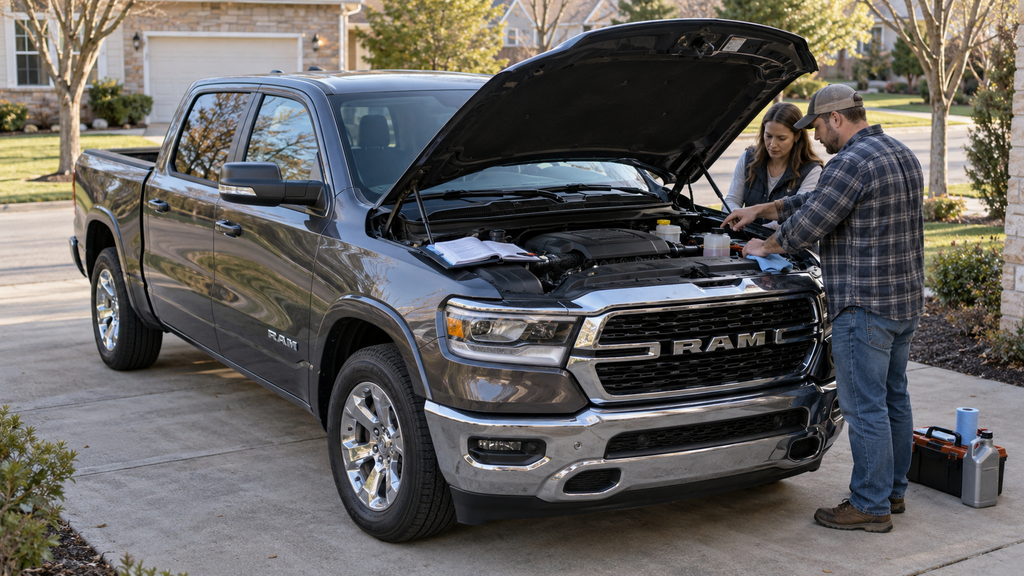
A 2026 Ram 1500 HEMI for sale near me comes with a service routine that starts soon after delivery. Your truck tracks oil life, mileage, and service messages while you drive. Therefore, the first months are less about guessing and more about watching the information Ram provides. Tire rotation, filter checks, brake inspections, and other service points arrive later. In addition, towing or frequent four wheel drive use can change how closely certain components deserve attention. Knowing those early checkpoints makes the first year easier to plan. How Does Your New Ram Know When Service Is Due? The 2026 Ram 1500 uses dashboard monitoring and scheduled mileage points to guide routine service. The oil change indicator is one of the first tools you will use. It tracks engine operation and alerts you when an oil change is required. So, does every new Ram need its first oil change at the same mileage? No. The oil change indicator responds to how the truck is operated. Therefore, two trucks with similar odometer readings may reach an oil service message at different times. Your instrument cluster gives you access to oil life information before the warning appears. Checking that screen periodically gives you a clearer idea of when service is approaching. In addition, the owner's information recommends completing oil service after the required message appears. more Oil is only one part of early truck care. Fluid levels, tire pressure, tread condition, exterior lights, and visible leaks deserve regular attention. These checks take little time and can reveal something before the next scheduled appointment. Moreover, the first few months give you time to learn how your Ram responds during normal driving. Pay attention to new noises, steering changes, braking feel, or warning messages. When something feels different, recording when it started gives a technician useful context. Early Maintenance Milestones The first year does not require you to memorize the entire maintenance schedule. Instead, focus on the earliest mileage points and the messages shown by the truck. Ram lists tire rotation at 10,000 mile intervals, with earlier rotation possible when tread differences reach the stated limit. Rotation moves tires between positions to spread wear more evenly. Therefore, the tread pattern across all four tires should remain part of every early service review. At 12,000 miles, the cabin air filter reaches an inspection point. This filter cleans incoming cabin air before it moves through the climate controls. Dust, pollen, and debris collect in the filter media as air passes through it. The 15,000 mile interval introduces several chassis inspections. Front suspension parts and tie rod ends receive attention at this stage. Brake linings also receive an inspection. In addition, technicians can look for wear or damage that may not produce a dashboard warning. By 30,000 miles, the engine air cleaner reaches its listed replacement point. Clean intake air supports proper engine operation by limiting dirt entering the intake path. These early milestones create a simple sequence: Around 10,000 miles, review tire rotation needs and tread wear. Around 12,000 miles, have the cabin air filter inspected. Around 15,000 miles, inspect brake linings, front suspension parts, and tie rod ends. Around 30,000 miles, address the engine air cleaner and listed drivetrain inspections. Your oil change message may appear between those mileage points. Therefore, oil service should follow the truck's indicator instead of waiting for another scheduled item. Does Towing Change Your Maintenance Plan? Frequent towing places added load on drivetrain, axle, brake, and cooling components that require closer inspection. Pulling a trailer asks the truck to move more total weight from a stop. It also asks the brakes to slow more total mass. For that reason, towing should be part of every service conversation. Tell the technician how frequently you tow and what type of trailer you pull. Trailer weight, trip length, terrain, and frequency all give useful context. Axle components receive specific attention in Ram's maintenance information. Frequent trailer towing or demanding driving can call for closer review of axle fluid and related components. Four wheel drive use can also bring transfer case service into the plan. Off pavement travel deserves similar attention. Mud, water, dust, and rough surfaces can place extra demand on tires, suspension parts, seals, and underbody components. Therefore, a truck that spends weekends on rough property roads may need closer visual inspection than a pavement only truck. Brakes also deserve careful review when trailers are part of the routine. More mass means the truck and trailer must dissipate more energy while slowing. Trailer brakes handle part of that work when properly equipped, but the truck's brakes still remain central. Before a long towing trip, check tire pressure, tire condition, lights, hitch hardware, fluid levels, and trailer connections. These checks support preparation before mileage alone triggers the next service point. What Your 2026 Ram Warranty Covers Warranty coverage starts when you take delivery, but different coverage periods apply to different parts of the truck. Therefore, it helps to separate the basic limited warranty from powertrain coverage. The current Ram and Mopar information lists a 3 year or 36,000 mile basic limited warranty. That coverage applies to qualifying repairs tied to defects covered under the warranty terms. Exact exclusions and requirements remain in the official warranty information supplied with the truck. Ram also offers a powertrain limited warranty extension for qualifying original owners of eligible 2026 vehicles. That extension reaches 10 years or 100,000 miles for covered powertrain parts. Does every future owner receive the full 10 year extension? No. The extension carries eligibility rules tied to qualifying vehicles and original ownership. Therefore, you should verify your specific truck and coverage status through official Ram or Mopar resources. Powertrain coverage also should not be treated as a replacement for every other warranty. Different components can fall under different terms. In addition, routine maintenance and wear items follow separate rules. Keep service receipts and maintenance records from the beginning. Good records show when work was completed and what the truck received. They also make later service conversations easier because dates and mileage remain easy to verify. Building a Service Routine After Purchase A reliable service routine does not need to be complicated. Start with dashboard messages, then pair them with the mileage points in your owner's information. Finally, keep a record each time service is completed. Ram provides digital owner resources where you can review vehicle information, warranty details, and maintenance history. These tools give you another place to track upcoming needs beside the instrument cluster. Your dealership service records can also create continuity between visits. A technician who can review earlier tire rotations, inspections, oil changes, and filter work has more context during the next appointment. Before each visit, write down anything you noticed while driving. A noise that appears only when turning, braking, towing, or starting cold gives the service team a clearer starting point. In addition, note any warning message before clearing it. The first months with a new Ram set the pattern for the years ahead. Watch the oil life display, follow the early mileage checkpoints, and adjust service attention to how you use the truck. A 2026 Ram 1500 HEMI for sale near me brings serious truck hardware, but good care still starts with simple habits. Keep the schedule visible, keep records organized, and give each service visit the context your truck has earned on the road.

Dodge Chrysler Jeep finance

Dodge Chrysler Jeep Finance Pricing From Quote to Signing

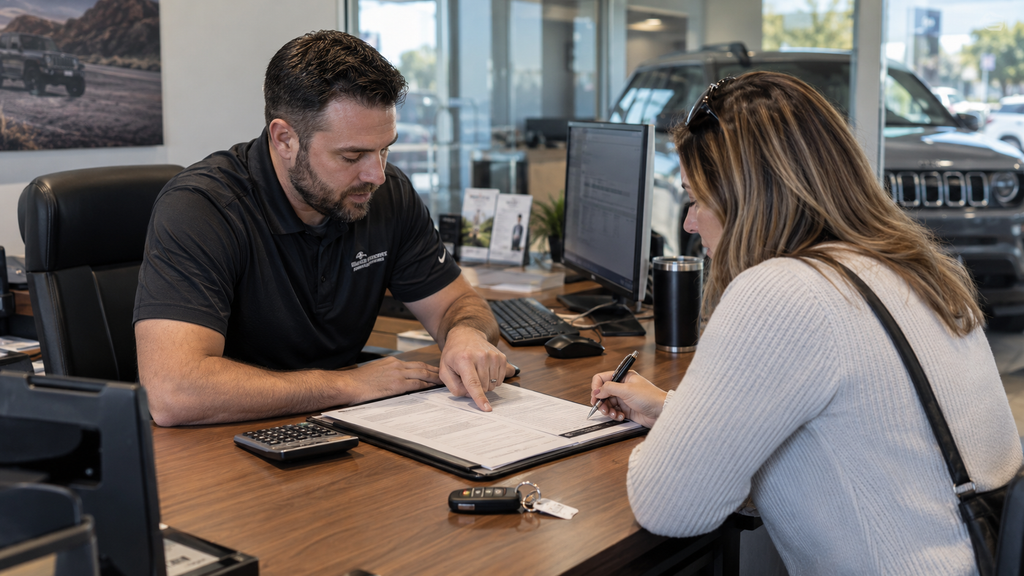
Dodge Chrysler Jeep finance pricing stays easier to review when each figure remains distinct from quote through signing. A vehicle purchase can involve several numbers before the final contract appears. Therefore, it helps to know what each number represents before comparing them. The vehicle price, taxes, fees, rebates, trade value, down payment, APR, and loan term all play separate roles. In addition, optional products can change the amount financed. A clear process keeps those figures organized from the first written quote through the final signature. What Should a Written Vehicle Quote Include? A written vehicle quote should identify the vehicle price and the charges used to reach the purchase total. The quote gives you a reference point before financing terms enter the discussion. Therefore, the document should show more than one large total. The vehicle price should appear separately from taxes, registration charges, and other listed fees. In addition, any rebate or discount should show the amount and the qualification tied to it. If a trade is part of the transaction, its value should also appear separately. This keeps the vehicle purchase price distinct from the value assigned to your current vehicle. Why request the quote in writing? A written quote gives you a document to compare with later paperwork. Therefore, you can review changes instead of relying on memory. The total should also make clear which items are required and which items are optional. more An out the door figure is another useful reference. It combines the vehicle price with taxes, fees, and selected items before loan interest is applied. However, that total does not show the full cost of borrowing. APR and loan length enter after the purchase figures are established. How Rebates Taxes and Fees Change the Total The advertised price may not match the final purchase total because several charges can appear afterward. Taxes, registration charges, document fees, and selected products can change the number. Therefore, each line deserves its own review. Rebates need separate attention because some programs require specific qualifications. A discount should only enter your expected total after eligibility is confirmed. In addition, two customers may see different rebate combinations on the same vehicle. That can happen when one person qualifies for a program that another person does not. Taxes and registration charges also vary by transaction. Therefore, the final amount can change when address, trade details, or registration information changes. Dealer listed fees should appear clearly before signing. If a charge is unfamiliar, ask what it covers and whether it is required. The goal is simple. You should be able to trace the total from the starting vehicle price through each added or subtracted line. That makes the final number easier to review before financing begins. How Financing Changes the Numbers Financing does not replace the vehicle price. Instead, it sets the structure for paying the remaining balance. Therefore, the monthly payment should never be the only number you review. APR shows the annual cost of borrowing. The loan term shows how many months you will make payments. A longer term can reduce the monthly payment while increasing total finance cost. By contrast, a shorter term can raise the monthly payment while reducing the length of the loan. The amount financed is the principal carried into the loan. It can reflect the purchase total after down payment, trade credit, and other transaction items are applied. In addition, selected finance products can increase that amount. A customer may ask why a payment changed even though the vehicle price stayed the same. The answer can come from APR, term length, down payment, or selected products. Therefore, compare those items together instead of looking at payment alone. Before accepting a loan structure, review these figures together: APR should match the rate shown in the finance agreement. Loan term should match the number of months you agreed to finance. Amount financed should match the balance carried into the loan. Monthly payment should match the payment created by those agreed terms. These figures work together. Therefore, a change in one can change the payment even when the vehicle price remains the same. What Should You Compare Before Signing? The final contract should be checked against the agreed price, selected products, financing terms, and amount financed. Your earlier written quote provides the starting reference for that review. First, compare the agreed vehicle price with the contract price. Then review taxes, fees, rebates, and trade information. In addition, check every selected product before looking at the loan section. This keeps purchase items separate from financing terms. Next, review APR, loan length, amount financed, and monthly payment. If one figure differs from the earlier discussion, ask for an explanation before signing. Therefore, there should be no need to rush through the final paperwork. Optional products deserve a separate look. Service contracts, GAP coverage, and other products should appear only when you selected them. In addition, their prices should be visible before they enter the amount financed. A final review should answer a simple question. Do the numbers in the contract match the transaction you agreed to? If not, stop and ask about the difference before signing. Questions to Ask From Quote to Signature The purchase process becomes easier to follow when each stage has a clear checkpoint. Therefore, use the written quote as the reference for every later step. Before visiting, ask for the vehicle price and out the door total in writing. Ask which rebates are included and what qualifications apply. In addition, ask which fees appear in the total. During financing, ask for the APR, loan term, amount financed, and monthly payment. Also ask whether any optional products have been added. Therefore, you can see how the loan structure connects to the purchase figures. Before signing, compare the contract with the written quote and finance terms. Check the vehicle price, taxes, fees, rebates, trade value, selected products, APR, term, and amount financed. If something changed, ask for the reason before you sign. Dodge Chrysler Jeep finance pricing should stay traceable from the first quote through the final contract. A clear sequence makes each number easier to review. Therefore, the strongest approach is to compare the written price, loan structure, and final paperwork as separate steps. That keeps the transaction organized from the first conversation through the final signature.

2 Door Jeep Wrangler Rubicon for Sale Near Me Comparison

2 Door Jeep Wrangler Rubicon for Sale Near Me Comparison

A 2 door Jeep Wrangler Rubicon for sale near me presents a different layout from the longer four door Wrangler. Moreover, the body style changes more than rear access. In addition, wheelbase, turning space, breakover geometry, cargo room, seating, and towing limits all shift. Therefore, choosing the body first can make trim research much easier. Jeep keeps the familiar open air character in both forms. However, the shorter and longer bodies suit different routines, passenger plans, and trail goals. What Changes Between a 2 Door and 4 Door Wrangler? The 4 door Wrangler adds 21.6 inches of wheelbase and two rear doors. It also adds one passenger position and much more cargo room. The 2 door uses a 96.8 inch wheelbase, while the 4 door stretches to 118.4 inches. Additionally, overall length grows from 166.8 inches to 188.4 inches. Therefore, the longer body gives Jeep more room for rear seats and cargo behind them. A shopper may ask whether those extra inches change daily maneuvering. As a result, the shorter body needs less room for tight turns. A Rubicon 2 door posts a 32.7 foot turning diameter. The comparable 4 door figure reaches 38.8 feet. Consequently, the 2 door can feel easier in tight parking areas and narrow trail sections. more However, the longer wheelbase brings its own strengths. Rear passengers gain dedicated doors, and the cabin stretches farther behind the front seats. In addition, the 4 door seats five instead of four. That difference matters for households carrying rear passengers on a regular basis. Does the Shorter Wheelbase Change Trail Driving? A shorter wheelbase reduces the distance between the axles, which changes turning space and breakover geometry. Breakover angle describes how steep a crest the vehicle can cross before the center underside approaches the ground. Moreover, the 2 door Rubicon posts a 27.8 degree breakover angle. The 4 door Rubicon measures 22.6 degrees. So, is the 2 door automatically better on every trail? No. The shorter body gains an edge when tight turns or sharp crests dominate the route. However, tire choice, axle gearing, ground clearance, traction hardware, and driver technique still shape trail progress. Additionally, the longer body can feel steadier across some uneven stretches because the axles sit farther apart. Its added cabin length also leaves more room for passengers and gear during longer outings. Therefore, trail planning should start with terrain type and passenger needs together. Rubicon hardware remains central in either body. Both versions can pair strong axle hardware with locking differentials and low range gearing. Trail focused tires also remain available with either body style. The main distinction comes from the distance between the axles and the space that distance creates. Rear Seats and Passenger Access Passenger count tells only part of the story. The 2 door Wrangler seats four, and rear passengers enter through the front door openings. Therefore, front seats move forward to open a path into the second row. By contrast, the 4 door seats five and adds two dedicated rear doors. That layout change matters when rear passengers ride along several times each week. Parents, adult passengers, and anyone carrying bags into the second row gain a simpler entry path. In addition, rear doors make loading child seats or bulky items easier. The longer body also creates more cabin length for the second row. Therefore, passengers gain more room to settle in without moving the front seats for entry. The 2 door keeps a tighter cabin with fewer openings and a shorter overall footprint. Before choosing, think about who will sit in back and how frequently those seats will be used. A couple using the rear seat for occasional guests may accept the 2 door access pattern. A household moving several passengers each week may place more weight on four door access. Cargo and Towing Differences Cargo room changes sharply between the two bodies. Jeep lists 31.7 cubic feet of maximum cargo volume for the 2 door. By contrast, the 4 door reaches 72.4 cubic feet. Therefore, the longer Wrangler gives far more room for camping equipment, coolers, luggage, sports gear, or pet supplies. That gap can shape trip planning before trim choice even starts. A smaller load may fit easily in the 2 door with the rear seat folded. However, larger gear sets can use the extra floor length and rear cabin volume of the 4 door. Towing limits also separate the body styles. However, the 2 door reaches a 2,000 pound maximum when properly equipped. Certain 4 door Rubicon configurations can reach 5,000 pounds. Consequently, trailer plans may narrow the body choice quickly. Before hitching a trailer, owners still need to check the exact configuration. Payload, tongue weight, hitch hardware, and trailer equipment all set limits. In addition, passengers and cargo count toward the total load carried by the Wrangler. A shopper deciding between the two bodies should compare four load factors: Regular gear volume should fit without forcing constant seat changes or leaving needed items behind. Rear seat use should leave enough cargo space for the bags or equipment carried on routine trips. Trailer plans should stay within the rating for the exact Wrangler configuration and installed equipment. Passenger, cargo, and tongue weight totals should remain within the published load limits. Those points connect the published numbers to the way the Wrangler will be used. Choosing the Body Style Before the Trim Therefore, body style and trim solve different parts of the decision. Door count sets the basic package for length, seating, access, cargo room, turning space, and trailer limits. Trim selection then changes equipment, axle hardware, tires, interior features, and other details. For that reason, start with the routine you expect from the Wrangler. Think about passenger frequency, parking space, trail type, cargo load, and trailer plans. Then compare trims within the body that fits those needs. The 2 door keeps the classic short Wrangler shape and tighter turning dimensions. It also carries four passengers and a smaller cargo area. The 4 door adds rear access, more cabin length, five seats, and much greater cargo volume. In addition, certain versions raise the towing ceiling well above the 2 door limit. A 2 door Jeep Wrangler Rubicon for sale near me suits shoppers who prioritize short dimensions. Its trail geometry also supports tight routes. The four door deserves equal attention when passenger access, cargo space, or trailer plans carry more weight. Either body can keep the open air Jeep character that draws people to the Wrangler in the first place.

2026 Dodge Durango R/T 392 for Sale Trim Differences

2026 Dodge Durango R/T 392 for Sale Trim Differences

A 2026 Dodge Durango R/T 392 for sale brings more than a larger HEMI engine to the Durango lineup. The 2026 R/T now carries a 6.4L 392 HEMI V8 with 475 horsepower and 470 lb ft of torque. That change gives the trim a much sharper identity than the previous R/T. However, the engine is only one part of the story. Dodge also changes the suspension, brakes, rear axle hardware, steering calibration, exhaust, and drivetrain setup. Those changes shape how the SUV launches, corners, stops, and handles trailer weight. Therefore, trim research should look beyond horsepower alone. What Changed for the 2026 Durango R/T 392? The 2026 Dodge Durango R/T 392 replaces the former R/T powertrain with a 6.4L 392 HEMI V8. That engine produces 475 horsepower and 470 lb ft of torque. Dodge pairs it with an eight speed automatic transmission and standard all wheel drive. As a result, the R/T 392 reaches 60 mph in a claimed 4.4 seconds. So, what changed from the prior R/T? The biggest mechanical shift is the move away from the 5.7L HEMI. The 2025 R/T used that smaller V8 and produced 360 horsepower. The 2026 version adds 115 horsepower and 80 lb ft of torque. Therefore, acceleration changes far more than the familiar R/T badge may suggest. more Additionally, the transmission plays a major role. It responds to engine load, road grade, traction, and driver input when selecting gears. Moreover, paddle shifters give the driver direct gear control. In addition, the all wheel drive hardware can vary torque between the front and rear axles. That setup supports stronger launches while keeping four driven wheels available during normal road use. R/T 392 vs GT and GT HEMI Powertrains The current Durango range includes several very different engine choices under familiar trim names. A shopper may ask whether the R/T 392 is simply a faster GT HEMI. The direct answer is no. The engine jump is large, while the surrounding hardware also changes. For this reason, start with the standard GT and its 3.6L Pentastar V6 with 295 horsepower. Dodge also offers a 5.7L HEMI V8 on certain GT configurations. Additionally, that engine produces 360 horsepower and 390 lb ft of torque. By contrast, the R/T 392 moves to 475 horsepower and 470 lb ft. Consequently, those numbers change how each Durango responds to throttle input. The V6 favors smoother power delivery for regular road driving. The 5.7L HEMI adds stronger low speed pull and more V8 character. Moreover, the 392 adds another major step in output. Passing, merging, and accelerating with added weight all require less throttle travel. However, horsepower should not stand alone during trim selection. The GT HEMI remains a strong V8 choice for shoppers who want towing strength without moving into the R/T 392. The R/T makes more sense when engine output and specialized chassis hardware carry equal weight in the decision. What Changes Beyond the 392 HEMI? The R/T 392 also changes suspension control, braking hardware, rear axle operation, steering calibration, and exhaust tuning. Each component has a specific job. Together, they shape how the Durango handles the extra engine output. Moreover, adaptive dampers change how firmly the suspension controls wheel and body movement. Firmer control can reduce excess body motion during quick direction changes. Softer responses can preserve comfort when the road does not demand aggressive control. Therefore, the suspension can react differently as driving inputs change. Additionally, the electronic limited slip rear axle manages torque across the rear wheels. When one rear tire has less grip, the axle can redirect more torque to the side with greater traction. This matters during hard acceleration and corner exit. Moreover, it supports cleaner power delivery from the 392 V8. Beyond that, Brembo brakes add six piston front calipers and four piston rear calipers. Larger multi piston hardware spreads clamping force across the brake pads. That setup supports repeated deceleration with strong pedal response. In addition, the high flow exhaust changes how the 392 breathes and sounds. A shopper asking what the R/T adds beyond horsepower should focus here. The trim pairs the larger engine with hardware that controls motion, traction, and stopping force. Towing, Seating, and Fuel Use The 2026 Dodge Durango R/T 392 can tow up to 8,700 pounds when properly equipped. That number is impressive, but it needs context. A GT HEMI with the Tow N Go package can also reach an 8,700 pound maximum. Does that make the two trims equal for towing? No. The matching maximum rating does not erase their engine and chassis differences. The R/T 392 still brings 475 horsepower, adaptive dampers, Brembo brakes, and its electronic limited slip rear axle. By contrast, a properly equipped GT HEMI reaches the same published trailer ceiling through its own equipment package. Moreover, trailer weight changes acceleration and braking demands. More engine torque can make merging with a loaded trailer feel less strained. Strong brake hardware supports the vehicle during repeated speed changes. However, owners must still follow payload, tongue weight, hitch, and trailer limits for the exact configuration. In addition, cabin layout deserves attention. Current R/T 392 versions use second row captain's chairs, creating seating for six. That layout gives second row passengers separate seats and a center pass through. Therefore, families should compare seating needs alongside engine output. Finally, fuel use is another clear tradeoff. A larger 6.4L V8 consumes more fuel than the V6 during similar driving. Shoppers should weigh that cost against the stronger engine and specialized chassis hardware. Comparing the Durango Configurations Choosing among current Durango trims works best when each mechanical difference connects to a clear driving priority. Start with the engine, then move through braking, suspension, towing, seating, and fuel use. That order keeps the comparison grounded in hardware. For regular commuting and family transportation, the V6 GT may provide enough power with lower fuel demand. Drivers wanting a V8 can also look at GT HEMI configurations. Those versions add the sound and torque of the 5.7L engine without requiring the R/T 392. The R/T 392 serves a different priority set. It combines the 6.4L HEMI with adaptive dampers, Brembo brakes, active all wheel drive, and a limited slip rear axle. Consequently, the trim changes acceleration, chassis response, and braking hardware together. Before choosing, ask how much value you place on the 392 engine itself. Then consider whether the suspension and brake upgrades match how you plan to drive. Towing needs also deserve a separate check because GT HEMI Tow N Go can reach the same published maximum. A 2 026 Dodge Durango R/T 392 for sale makes the strongest case when those mechanical changes matter together. For other shoppers, a GT or GT HEMI may cover the same passenger and trailer needs with a different powertrain.

Bad Credit New Car Financing Guide for Louisiana Drivers

Bad credit new car financing may still give Louisiana drivers a path toward dependable transportation. A credit score is only one part of a lender review. Additionally, income, debt, residence, vehicle price, and the requested loan amount matter. Therefore, one prior denial does not close every route. Dealership finance teams may work with several lenders, each using its own review rules. Still, every approval remains subject to verified information and the chosen vehicle. Knowing the process can make your next application clearer and less stressful. Can You Finance a Vehicle With Bad Credit? First, a low credit score does not create an automatic denial. Additionally, lenders review the full application before issuing a decision. They may check income, housing costs, monthly debts, job history, and recent payment records. Additionally, they review the amount you want to finance. Why can two lenders reach different answers? Each lender uses its own credit standards and loan programs. One lender may accept a file that another lender declines. Therefore, a past rejection does not predict every future result. more No credit history creates a different challenge. The lender has less repayment history to review. In that case, steady income, complete records, and a manageable loan request may carry more weight. A cosigner may also change the application, though both people share legal repayment responsibility. Bad credit new car financing is never guaranteed. However, a complete application gives the finance team more information to present. Honest details also reduce surprises during document review. Dealership Financing Versus One Bank A bank application usually reaches one financial institution. By contrast, a dealership may send your application to several lenders. Those lenders may offer different rates, terms, down payment requests, or vehicle limits. Does dealership financing replace outside shopping? No. You may request a preapproval from a bank or credit union before visiting. Then you can compare that offer with any dealership options. This approach gives you a clear reference point. Furthermore, lender access does not mean every offer will fit your budget. Review each proposal on its own figures. A lower payment may come from a longer term. A lower rate may require more cash down. Therefore, compare the full loan structure before choosing. Moreover, the finance team may suggest another vehicle or loan amount. That change is not always a rejection of the shopper. Instead, it may reflect the lender’s limits for price, age, mileage, or vehicle value. Preparing for the Application Complete records can keep the review moving. Before applying, gather documents that confirm your identity, address, income, insurance, and trade information. Additionally, the lender may request more records after the first review. Why does the lender need these items? Credit reports do not confirm current pay, residence, or insurance. Therefore, supporting records connect the application with your present financial picture. Bring the following items when available: A valid government identification card confirms your identity and current information. Recent pay stubs or bank records show current income and payment deposits. A utility bill, lease, or bank statement may confirm your present address. Trade documents should include registration, payoff details, and the current lender information. Self employed applicants may need tax returns or several bank statements. Additionally, income from more than one source may require separate proof. Make sure names, addresses, and figures match across the records. Contact the finance team before your visit when a document is difficult to obtain. That conversation may prevent a second trip. It also lets you learn which records your lender group may request. Down Payment Trade Value and Vehicle Choice A down payment lowers the amount financed. Cash, positive trade equity, or both may support that reduction. However, the required amount varies by application and vehicle. Can a trade replace cash down? It can when the trade is worth more than its loan payoff. The difference becomes positive equity. That equity may reduce the new loan amount. Negative equity works differently. When the payoff exceeds the trade value, the remaining balance may enter the next loan. Consequently, the amount financed can rise. A larger request may also change the available terms. Furthermore, vehicle choice matters because lenders review the asset tied to the loan. Price, age, mileage, book value, and loan amount all enter that review. Therefore, a newer vehicle is not always easier to finance than a used one. The full structure matters more than one label. A less expensive vehicle may create a smaller loan request. Still, age or mileage limits can remove certain used vehicles from some lender programs. Ask the finance team to explain why a specific vehicle fits or fails a lender program. What Should You Compare Before Signing? The monthly payment is only one figure. Annual percentage rate, loan term, amount financed, fees, and total repayment deserve equal attention. Together, these figures show the cost of borrowing. A longer term can lower the monthly payment. However, it may keep the loan open longer and raise total interest. A shorter term may create a higher payment while reducing total interest. Before signing, review these figures: The amount financed shows how much money the lender is providing. The annual percentage rate reflects the yearly borrowing rate and certain finance charges. The loan term shows how many months you will make payments. The total repayment shows the full scheduled amount across the loan. Also review optional products separately. Ask what each item costs and whether it changes the payment. You should know which items are required by the lender and which are optional. Do not rush through the contract. Read every figure and ask about unfamiliar charges. Furthermore, compare the final contract with the proposal you discussed. The numbers should match before you sign. What Happens After You Apply? An online application starts the review. It does not create a final approval by itself. The finance team may contact you for income records, address proof, insurance details, or trade information. Prequalification may use preliminary information. Final approval usually requires verification and a specific vehicle. Therefore, terms may change after the lender reviews the complete file. Once a lender responds, the finance team can explain the offered rate, term, payment, and down payment. You may accept the offer, request another vehicle structure, or decline it. Furthermore, ask how long the offer remains available. After signing, make payments by the due date and keep proof of each payment. On time payments may support a stronger credit record. Missed payments can damage credit and place the vehicle at risk. Ross Downing CDJR can discuss new and used vehicle financing with shoppers near Hammond. Bring complete records and a realistic monthly budget. A clear review of the loan, vehicle, and total cost can support a sound decision.

Jeep Service Near Me Visit Guide for Hammond Drivers

Jeep service near me should lead to clear steps from check in through vehicle pickup. Your visit starts with scheduling, then moves through intake, inspection, approval, repair, and a final review. However, each visit may follow a different timeline. An oil change has a known scope, while a warning light may require testing first. Therefore, clear details and steady communication matter from the start. This guide explains what you should expect before, during, and after your appointment at a CDJR service center. Scheduling and Preparing for Your Visit A strong service visit begins before you arrive. First, choose an appointment time that fits the work you need. Routine maintenance usually needs less diagnostic time than a noise, leak, or warning light. Therefore, describe the concern when you schedule the visit. What details should you share? Write down when the issue appears, how long it lasts, and what you notice. Include speed, road surface, engine temperature, warning messages, sounds, smells, or fluid spots. Additionally, note any recent repairs or battery work. These details give the technician a clearer starting point. Bring any service records that may relate to the concern. Also, remove personal items from the cabin and cargo area. If you need transportation, ask about available options before arrival. Some repairs may keep the vehicle longer than expected. Before leaving home, gather a few useful details: more Record the mileage and any warning messages shown on the dash. Note when the concern started and what makes it appear. Bring warranty papers or prior repair records that relate to the visit. Good preparation reduces guesswork during intake. It also gives the advisor a stronger description to place on the repair order. What Happens When You Arrive for Service? Your appointment time begins the intake process. It does not always mean a technician starts work at that exact moment. First, the advisor confirms your name, contact details, mileage, and requested work. Then the advisor records the concern in clear terms. The advisor may also ask whether you plan to wait or leave the vehicle. Additionally, you may review visible damage, fuel level, and personal items. This step creates a shared record before the vehicle enters the shop. Does routine work follow the same path as diagnosis? The opening steps are similar, but the work inside the shop differs. An oil change follows a known task list. By contrast, a warning light requires testing before anyone knows the needed repair. Confirm how you want updates. Text, phone, and email may all be available. Also, tell the advisor whether another person may approve work or pick up the vehicle. Clear contact details prevent delays when the shop has findings to share. How Diagnosis and Repair Approval Work Diagnosis is the process used to identify the source of a concern. A stored code may point toward a circuit, sensor, or operating fault. However, the code does not always prove which part failed. Therefore, the technician may inspect wiring, test parts, review data, or complete a road test. When does repair work begin? It begins after the shop has enough information to prepare a repair plan. The advisor then explains the findings, price, parts, labor, and updated timing. You choose which work to approve. A multipoint inspection may reveal items outside the original request. Those findings should be separated from the work you scheduled. Additionally, the advisor should explain which items need prompt attention and which may wait. You may approve, decline, or postpone those items. Warranty review follows its own process. The team checks the vehicle, repair cause, coverage terms, and required records. Therefore, warranty approval may take more time than a basic maintenance visit. Ask which part of the work is covered and which charges remain your responsibility. Clear approval protects both you and the repair team. It creates a written record of the work you accepted before repairs move forward. Why Can the Completion Time Change? The first time estimate is based on the information available during check in. After testing begins, the technician may find that the repair needs another step. A worn connector, hidden leak, or related fault may change the original plan. Therefore, the advisor may provide a new estimate. Parts supply can also change timing. A common filter or brake part may be on hand. A trim specific module, wiring part, or internal engine item may need to be ordered. Additionally, delivery dates may shift after the order is placed. Shop workload also plays a role. Some jobs require a technician with certain training or tools. A repair may wait for an open bay, a special tool, or another test. However, the service team should explain the reason for the delay. What should you expect during a longer repair? You should receive updated timing, new findings, and any revised price before added work begins. Responding quickly keeps the repair moving. If you miss a call, contact the advisor as soon as possible. A changed timeline does not always signal a problem. It may reflect a more complete diagnosis or a part that was not available during intake. Clear updates make those changes easier to follow. Reviewing Your Vehicle at Pickup Pickup should include more than payment and a set of keys. First, review the repair order with the advisor. Confirm which work was completed, which parts were replaced, and which items were declined. Additionally, ask whether any warning lights remain. Compare the final charges with the estimate you approved. If a line is unclear, ask for an explanation before leaving. The advisor should also explain any warranty coverage, future maintenance, or return visit that may be needed. Before driving away, check the concern that brought you in. Start the engine, review the dash, and listen for the original noise when safe. If the repair involved lights, windows, climate controls, or another cabin feature, test it before departure. Your service record should show the date, mileage, work completed, and parts used. Keep that record with your other maintenance papers. It gives future technicians a clear repair history and supports later warranty or resale questions. Jeep service near me should feel organized, clear, and respectful of your time. A good visit gives you a full picture of the work, the cost, and the next step. When you leave Ross Downing CDJR, you should know what was repaired and what needs attention later.

Diesel Trucks for Sale Louisiana Ram 2500 Towing Guide

Diesel trucks for sale in Louisiana draw attention when a trailer pushes beyond light duty towing. The Ram 2500 brings strong diesel torque, high tow ratings, and an available exhaust brake. However, the engine choice should start with your loaded trailer and cargo. A diesel truck may pull with less strain, yet it also carries more engine weight. Therefore, payload, hitch weight, passengers, and gear still shape the final choice. Louisiana towing may involve boats, campers, livestock trailers, or jobsite equipment. Additionally, each load places a different demand on the truck. For this reason, the smartest comparison begins with numbers from your trailer and the exact Ram 2500. Is a Diesel Ram 2500 Worth It for Towing? A diesel Ram 2500 makes the strongest case when towing is frequent, heavy, or spread across long routes. The available 6.7 liter Cummins Turbo Diesel I6 produces 1,075 pound feet of torque. That force arrives at lower engine speeds than the gas engine’s peak output. As a result, the truck pulls away with less revving under a heavy load. What does that feel like from the driver’s seat? Furthermore, the truck may hold a gear longer while climbing or merging. Additionally, the transmission has less need to chase higher engine speeds. This steadier pull is useful with large campers, equipment trailers, and loaded work trailers. more Still, diesel is not required for every Ram 2500 task. The gas 6.4 liter HEMI V8 offers a strong tow rating and a lower purchase price. It also carries less engine weight. Therefore, occasional towing with a moderate trailer may favor the gas engine. Start by asking how many miles the truck will tow each month. Then note the trailer’s loaded weight and the route. Long highway trips under load support the diesel case. By contrast, short local trips with rare towing may support gas. Start With the Loaded Trailer The trailer’s dry weight is only a starting point. Water, fuel, tools, food, cargo, and accessories raise its travel weight. Therefore, use the loaded figure whenever possible. Therefore, a public scale provides a clearer number than an empty brochure rating. Additionally, check tongue weight or fifth wheel pin weight. That weight presses directly on the truck. It counts against payload along with passengers, cargo, hitch hardware, and added equipment. Because of that, a truck may stay under its tow rating while exceeding payload. A conventional trailer places part of its weight on the hitch. A fifth wheel places a larger share in the bed. Consequently, fifth wheel shoppers need close attention to the door label. That label shows the payload limit for the exact truck. Before selecting a Ram 2500, gather these figures: Record the trailer’s loaded weight, not its empty shipping weight. Add passengers, bed cargo, hitch hardware, and installed accessories. Compare the total with the payload label and the truck’s tow chart. Furthermore, leave room below the listed limits. Travel loads change, and extra cargo appears quickly. A margin also gives you room for passengers or supplies added later. What the Cummins Diesel Changes The 2026 Ram 2500 diesel pairs the Cummins engine with a TorqueFlite HD eight speed automatic transmission. The engine’s high torque gives the transmission strong pulling force at lower speeds. Therefore, the truck can move a heavy trailer without constant high revs. Why does lower speed torque matter? A heavy trailer resists movement during starts and climbs. More torque at lower engine speed gives the truck stronger pull before the engine reaches its upper range. As a result, acceleration under load may feel steadier. Moreover, the diesel raises the Ram 2500’s maximum published tow rating. Ram lists up to 20,000 pounds with the diesel. The gas maximum reaches 17,750 pounds. However, those figures apply only to selected configurations. Cab style, bed length, drivetrain, trim, axle setup, and installed equipment change the rating. Therefore, do not apply the 20,000 pound number to every diesel Ram 2500. Check the exact truck’s label and the current Ram towing chart. Diesel Towing Versus Gas Payload Diesel pulls more, yet gas may carry more. Ram lists a maximum diesel payload of 3,600 pounds. The maximum gas payload reaches 3,930 pounds. Furthermore, the difference comes partly from the diesel engine’s greater weight. Why should a fifth wheel shopper care? Pin weight uses payload before people or cargo enter the truck. A heavy hitch, full cab, toolbox, and bed gear reduce the remaining room. Therefore, the gas model may offer more carrying room in selected setups. The diesel still offers the higher tow ceiling and stronger torque. However, a large fifth wheel may push a Ram 2500 near its payload limit. In that case, compare a Ram 3500 before making the purchase. The Ram 3500 offers a higher gross vehicle weight rating and greater payload in many configurations. That extra carrying room may suit large pin weights better. Consequently, the larger truck may be the safer fit even when the Ram 2500 tow rating appears sufficient. How the Exhaust Brake Assists The available diesel exhaust brake supports speed control when the driver lifts off the accelerator. It creates resistance through the engine and slows the truck. Therefore, the service brakes do not handle every part of a descent alone. Does the exhaust brake replace trailer brakes? No. Still, trailer brakes and the truck’s service brakes perform the primary stopping work. The exhaust brake adds support while descending hills or slowing under load. This feature may matter on bridge approaches, rolling roads, and long highway grades. It gives the driver another tool for holding speed. Additionally, it may reduce repeated brake pedal use during a long descent. Use the feature during the test drive when dealership staff can explain its settings. Notice how the truck responds after you lift from the accelerator. Then compare that response with the gas model. Purchase Price Fuel and Maintenance Diesel ownership starts with a higher purchase price. It also includes diesel exhaust fluid, fuel filter service, and larger oil service quantities. Therefore, fuel savings alone do not settle the cost question. When does diesel make financial sense? Frequent towing and high annual mileage strengthen the case. Heavy loads use the diesel engine’s torque. They may also produce better fuel results than a gas engine doing equal work. However, the payback period may still take years. Additionally, short trips deserve extra thought. Diesel emission equipment works best after the engine reaches full operating temperature. Repeated brief drives may not give the truck enough sustained heat. Therefore, a driver with mostly short errands should discuss that schedule before choosing diesel. A complete cost review should include: Purchase price and any finance difference. Fuel, diesel exhaust fluid, oil, and filter service. Annual towing miles, unloaded miles, and planned years of ownership. Resale value may support the diesel choice, yet future value is never guaranteed. Service records, mileage, trim, drivetrain, and local demand all shape resale. For this reason, buy diesel for the work it will perform now. Matching a Ram 2500 to Louisiana Towing Louisiana drivers tow through heat, rain, flat highways, boat launches, work yards, and rural roads. A four wheel drive Ram 2500 may add traction at wet ramps or soft jobsite entrances. However, four wheel drive hardware also adds weight. That weight may reduce payload on the exact truck. Furthermore, boat owners should check trailer weight with fuel, gear, and supplies aboard. Camper owners should include water, propane, batteries, food, and personal cargo. Work crews should count tools, attachments, and material stored in the bed. Used diesel trucks under $40,000 need a deeper inspection. Ask for oil, fuel filter, and emission service records. Additionally, review idle hours, prior modifications, hitch wear, and signs of heavy trailer work. A diesel technician should inspect the truck before purchase. Ross Downing CDJR currently lists new diesel Ram 2500 inventory in Hammond. Therefore, shoppers may compare equipped trucks, payload labels, cab layouts, and bed lengths in person. Bring your trailer figures and planned cargo list to that visit. A diesel Ram 2500 suits frequent towing, high trailer weight, and long loaded routes. Gas may fit lighter or occasional work with a lower entry price. The final answer comes from the loaded trailer, exact truck label, and your yearly driving plan.

Jeep Wrangler Sky One Touch Power Top for Sale Guide

A Jeep Wrangler Sky One Touch Power Top for sale offers powered open air access. You do not need to remove front roof panels. Additionally, the full length fabric panel retracts above both seating rows through a switch near the windshield. Therefore, fresh air reaches front and rear passengers within seconds. Furthermore, you can stop the roof partway when full opening feels unnecessary. Louisiana sunshine can change quickly, so easy roof control has clear appeal. Still, the feature works differently from a removable hardtop or a folding soft top. For this reason, knowing those differences makes your test drive more useful. What Does the Sky One Touch Power Top Do? The Sky One Touch Power Top is a powered fabric roof panel that slides toward the rear cargo area. Fixed rails remain above the doors while the center panel moves. Because the rails stay in place, you do not lift or store large front panels. The opening stretches across both seating rows, giving rear passengers a wide view above them. How does that change a normal Wrangler trip? You press the overhead control when you want more sun and airflow. The fabric then travels along its tracks until it reaches your chosen position. Additionally, you may stop the panel before it reaches the rear. That choice works well when passengers want some shade or less wind. more The feature keeps several hard roof elements around the cabin. Therefore, it does not leave the Wrangler fully open from side to side. In addition, doors, rails, and the rear roof structure stay installed. Even so, the large center opening delivers a stronger open air feeling than removable front panels alone. A Wrangler Sahara may pair this roof with removable rear quarter windows. That pairing expands the opening around rear passengers and the cargo area. As a result, the cabin feels more open without removing the whole roof assembly. How the Roof Opens and Closes The overhead switch controls roof movement. A brief press starts express movement, while another input stops the panel at a chosen point. Because the motor handles the work, opening does not require tools or panel storage. In addition, closing follows the same basic process through the overhead switch. Can you move the roof while driving? Jeep states that the top can open or close at speeds up to 60 mph. Therefore, a driver may react when light rain appears during a trip. Even so, safe attention matters, so use the control without taking your eyes from traffic. The fabric folds toward the rear as the panel opens. Additionally, tracks guide both sides and keep the movement even. Before closing, check for loose cargo, leaves, or anything near the moving fabric. That simple habit protects the track area and keeps the roof path clear. When rain starts, closing speed becomes one of the feature’s strongest points. A hardtop owner must stop and reinstall panels if they were removed. By contrast, the powered roof closes through the switch. Louisiana showers may arrive quickly, so that response can reduce roadside scrambling. Still, the top is not a substitute for basic care. Make sure the panel reaches its closed position before parking. Additionally, inspect the seals after washing or after debris collects around the rails. Clean contact points support a secure closure and quieter travel. What the Removable Rear Quarter Windows Change Additionally, rear quarter windows sit behind the rear doors on each side of the Wrangler. With the Sky One Touch package, these panels can be removed and stored in a supplied bag. The rear window, rear defroster, wiper, and washer remain part of the vehicle. Why remove the quarter windows if the roof already opens? The roof exposes the cabin from above, while the panels open the rear sides. Together, those openings let more air move around the second row and cargo space. Therefore, passengers gain a broader open air setting. By contrast, panel removal takes more effort than pressing the roof switch. You must release each panel, lift it free, and place it securely inside its bag. Additionally, the panels need protected storage during the drive. Their surfaces can scratch when they rub against tools or uncovered cargo. That said, leaving the panels installed may make more sense for a short commute. You still get the powered roof opening without handling separate pieces. For a weekend drive, removing them can create a wider open cabin. That choice gives you two distinct roof setups from the same package. Before rain, reinstall the panels while the weather remains clear. The powered roof closes quickly, but the quarter windows require manual placement. Therefore, plan ahead when dark clouds gather around Hammond or nearby communities. How Sky One Touch Differs From Other Wrangler Roofs Wrangler roof choices serve different forms of open air driving. The Sky One Touch option favors quick access and limited storage work. A removable hardtop favors a solid roof with panels that owners can lift away. A soft top favors broad manual opening with foldable fabric. What should you compare before choosing a roof? Focus on the steps each setup requires during your usual trips. Then consider where removed pieces will stay and how much opening you want. The Sky One Touch roof opens through a switch and keeps its outer rails installed. It suits drivers who want quick roof movement without storing front panels. A three piece hardtop uses removable front panels and a larger rear section. It offers a solid enclosure, but removed pieces need safe storage. A soft top folds back through manual steps on most configurations. It can create a wide opening, though setup requires more hands on work. Furthermore, cabin sound should be part of your test drive. Fabric above the cabin may transmit wind and rain differently from a solid hardtop. Therefore, drive at neighborhood, highway, and bridge speeds. Listen near the roof rails, rear panels, and windshield header. Check the roof from every seating position. Rear passengers may notice airflow and sound differently from front passengers. Additionally, open the roof halfway and fully during the same drive. Those checks show which position fits your preferred cabin feel. Moreover, price belongs in the comparison. The powered mechanism and package parts add equipment beyond a basic roof. Instead of judging the feature from photos, test each roof style when possible. Direct comparison shows whether quick operation earns its place in your Wrangler plans. Choosing the Feature for Louisiana Driving A Jeep Wrangler Sky One Touch Power Top for sale may suit drivers who want frequent open air trips. It reduces the steps between a closed cabin and a wide roof opening. Therefore, you may use the feature more during short drives, errands, and weekend routes. Is it a good match for Louisiana weather? The powered closure is useful when sunshine gives way to a brief shower. Humidity and heat also shape when you may want the roof open. Early mornings and cooler evenings may feel better than the middle of a summer afternoon. Before choosing one, operate the roof several times during your test drive. Watch both sides of the fabric and listen during movement. Additionally, remove and reinstall a rear quarter window with guidance from dealership staff. That step shows whether the manual part feels manageable. In addition, drive with the roof closed, partly open, and fully open. Then repeat part of the route at highway speed. Listen for wind near the front seal and rear panel edges. Still, remember that open roof sound is part of the Wrangler character. Current Ross Downing CDJR inventory shows a 2026 Wrangler Sahara with this roof package. The listing also includes removable rear quarter windows and their storage bag. Therefore, shoppers can inspect the full setup on an equipped vehicle. The right roof should fit the way you plan to use your Wrangler. Quick opening may matter most during frequent local drives. Full roof removal may matter more for longer open air outings. A careful test drive will show whether powered access matches your Louisiana plans.

Contact Us

Fill out this form below and we'll contact you shortly
*Required Fields