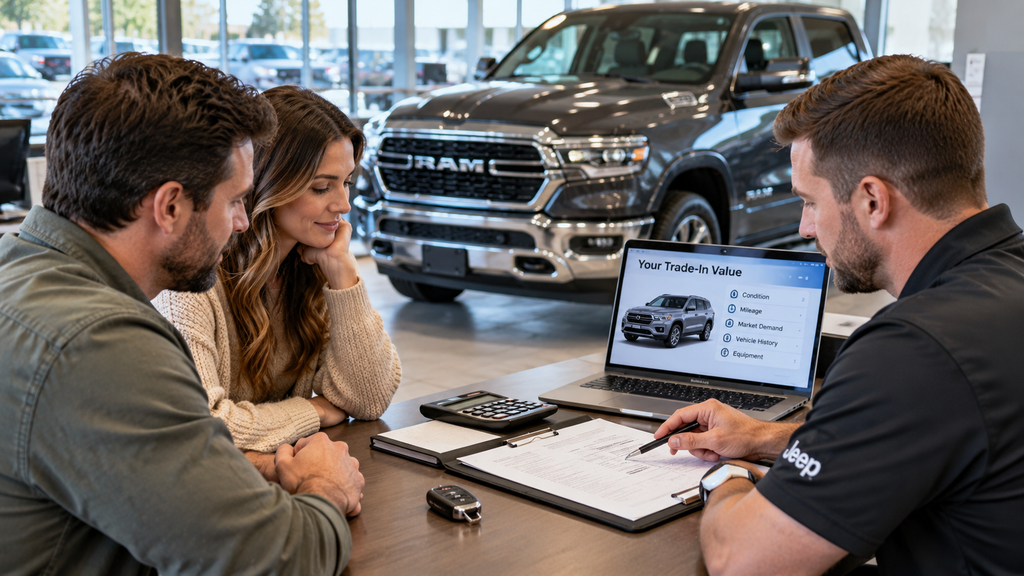





Used car financing in Louisiana becomes easier to review when the trade value and loan payoff remain separate. A clear appraisal gives you the vehicle value before financing starts. Therefore, you can see how equity changes the next loan amount. You can also compare the appraisal with outside research without mixing unrelated numbers. How a Trade Appraisal Establishes Vehicle Value How does a dealership establish a trade in value? A trade appraisal reviews the exact vehicle, its condition, mileage, equipment, and current market data. Therefore, the appraiser starts with the VIN, trim, and odometer before inspecting the vehicle itself. Mileage gives the appraiser one reference point. However, condition can move the number in either direction. Paint damage, worn tires, warning lights, interior wear, and mechanical concerns can all require reconditioning before resale. Installed equipment also matters because two vehicles from the same model year may not share the same specification. In addition, local demand can change what similar vehicles are bringing in the region. Used car financing in Louisiana should begin with a trade value that stands on its own. The appraisal should not change simply because the payoff is high or low. Instead, the vehicle value should come from the vehicle and the market around it. Before the appraisal, gather the details that define the vehicle: more Confirm the VIN, trim, mileage, major factory equipment, and any later modifications before the inspection begins. Point out known mechanical or cosmetic concerns so the appraiser can review them directly. Bring service records when they document recent maintenance, major repairs, or replacement parts. As a result, the appraisal has a clearer factual starting point. Why Online Estimates and Physical Appraisals Can Differ Why can an online estimate differ from an in person appraisal? Online tools rely on submitted details and market data, while the physical review checks the actual vehicle. An estimate may assume a certain condition level. However, an appraiser can see tire wear, body damage, interior wear, warning lights, or missing equipment. Those findings can change the final number. The reverse can also happen. A vehicle may show better condition than the owner expected. In addition, strong local demand can support a different market result than a broad online estimate. Used car financing in Louisiana works better when the online estimate serves as a reference point. It should not be treated as a guaranteed offer. Therefore, compare the assumptions behind each number. Check mileage, trim, options, condition, and location before deciding whether two figures truly conflict. Ross Downing CDJR offers a Value Your Vehicle tool for appraisal preparation. It asks for year, make, model, trim, mileage, payoff, options, and condition. A clear appraisal conversation should explain why the final number differs from an estimate. Therefore, you can judge the reasoning instead of focusing only on the difference. Separate Trade Value From Loan Payoff Does owing money on the vehicle reduce its trade value? No. The payoff changes your equity position, while the appraisal reflects what the vehicle is worth. The calculation is simple. Trade value minus current payoff equals your equity position. Therefore, a vehicle worth more than the payoff has positive equity. A vehicle worth less than the payoff has negative equity. This distinction matters during used car financing in Louisiana because equity changes the next amount financed. Positive equity can reduce the amount you need to borrow. Negative equity can increase it if the remaining balance enters the new contract. Review the numbers in this order: Start with the trade value before discussing the current loan balance. Verify the lender payoff using a current payoff amount instead of an old monthly statement. Subtract the payoff from the trade value to see the equity position before reviewing the next loan. Instead, avoid folding every figure into one monthly payment discussion. The trade amount, payoff, and next loan each answer a different question. If negative equity enters the next loan, the amount financed rises. As a result, interest may apply to a larger balance. Therefore, review that amount before choosing a term or monthly payment. Bring the Information That Supports a Clear Appraisal What should you bring before getting a trade appraisal? Bring the ownership and loan information that lets the dealership verify the vehicle and payoff. Registration can confirm ownership details. In addition, lender information gives the finance team a path to request the current payoff. A payoff quote matters because the balance can change as interest accrues or payments post. Service records can also add context. They do not guarantee a higher trade value. However, they can document recent maintenance, repairs, tires, or other work that the appraiser should know about. Used car financing in Louisiana may move faster when the trade information is complete before the finance discussion begins. Therefore, gather the following items before your appointment: Bring the current registration, lender name, account information, and any recent payoff quote you already have. Bring both key fobs, service records, and information about major repairs or modifications. Remove personal items so the cabin and cargo areas are ready for a complete inspection. Ross Downing CDJR also provides a finance center for customers reviewing loan options after the appraisal. Keeping the trade documents together makes the next step easier to review. Keep the Trade and Financing Numbers Separate What should a transparent trade conversation show you? It should show the appraisal, payoff, equity, purchase price, fees, and financing terms as separate figures. That separation makes the transaction easier to follow. Therefore, you can see whether a change came from the trade, the vehicle price, the loan structure, or another charge. Used car financing in Louisiana should not require you to reverse engineer the trade value from a monthly payment. Instead, ask to see the core numbers individually before discussing the final payment. Start with the trade amount. Then confirm the payoff and resulting equity. After that, review the next vehicle price, taxes, fees, down payment, amount financed, APR, and loan term. The monthly payment comes from those inputs. As a result, a lower payment can come from a longer term even when the amount financed stays high. Looking at every figure keeps the trade conversation focused on the actual appraisal. A fair process does not promise that every outside estimate will match the final offer. Instead, it gives you a clear explanation for the number and shows how that number enters the next transaction. Review the appraisal first, verify the payoff second, and examine financing after the equity position is clear.