

Blog / Hammond Jeep Financing

Dodge Chrysler Jeep Finance Pricing From Quote to Signing

Dodge Chrysler Jeep finance

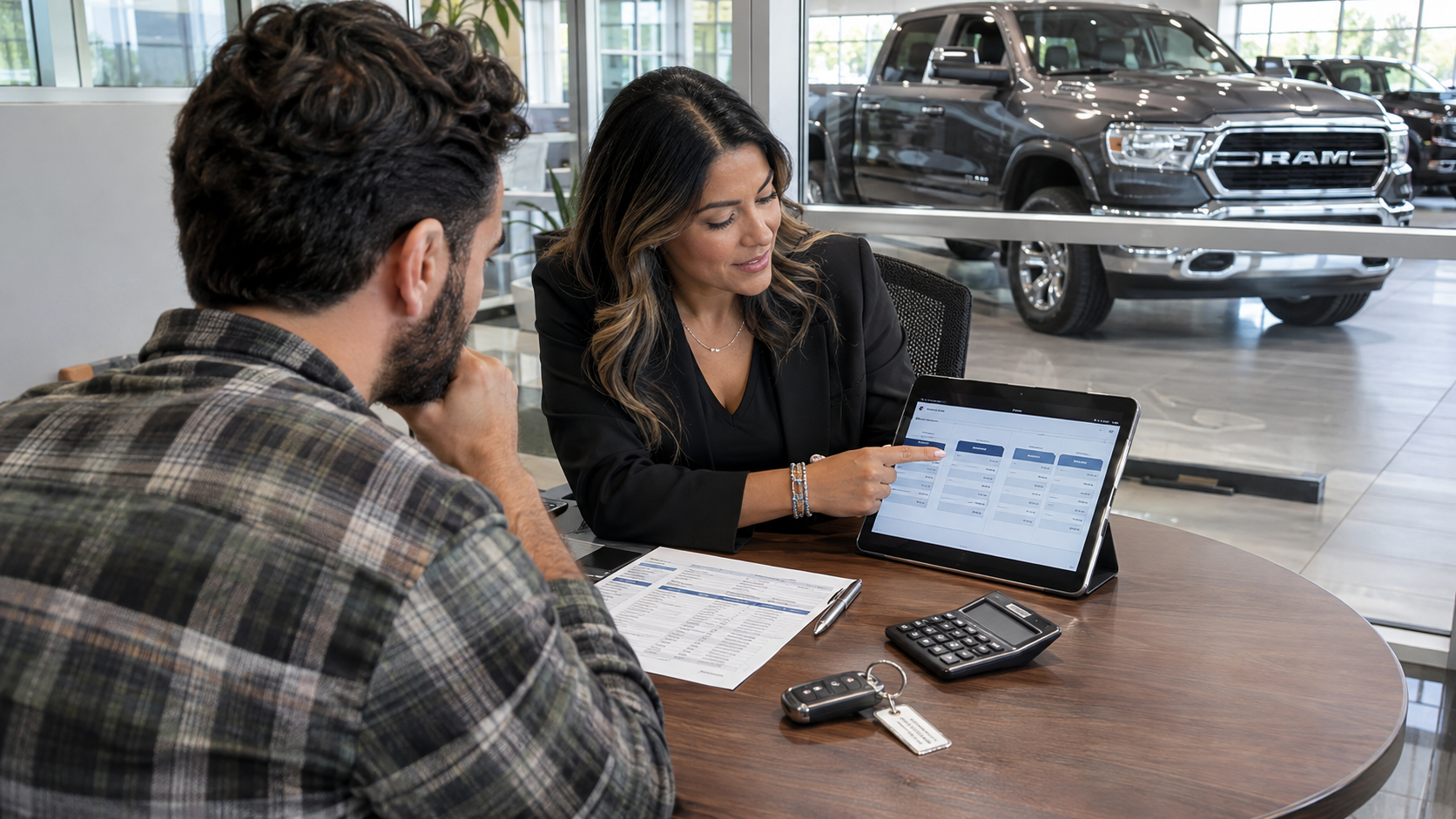
Dodge Chrysler Jeep finance pricing stays easier to review when each figure remains distinct from quote through signing. A vehicle purchase can involve several numbers before the final contract appears. Therefore, it helps to know what each number represents before comparing them. The vehicle price, taxes, fees, rebates, trade value, down payment, APR, and loan term all play separate roles. In addition, optional products can change the amount financed. A clear process keeps those figures organized from the first written quote through the final signature.

What Should a Written Vehicle Quote Include?

A written vehicle quote should identify the vehicle price and the charges used to reach the purchase total. The quote gives you a reference point before financing terms enter the discussion. Therefore, the document should show more than one large total.

The vehicle price should appear separately from taxes, registration charges, and other listed fees. In addition, any rebate or discount should show the amount and the qualification tied to it. If a trade is part of the transaction, its value should also appear separately. This keeps the vehicle purchase price distinct from the value assigned to your current vehicle.

Why request the quote in writing? A written quote gives you a document to compare with later paperwork. Therefore, you can review changes instead of relying on memory. The total should also make clear which items are required and which items are optional.

An out the door figure is another useful reference. It combines the vehicle price with taxes, fees, and selected items before loan interest is applied. However, that total does not show the full cost of borrowing. APR and loan length enter after the purchase figures are established.

How Rebates Taxes and Fees Change the Total

The advertised price may not match the final purchase total because several charges can appear afterward. Taxes, registration charges, document fees, and selected products can change the number. Therefore, each line deserves its own review.

Rebates need separate attention because some programs require specific qualifications. A discount should only enter your expected total after eligibility is confirmed. In addition, two customers may see different rebate combinations on the same vehicle. That can happen when one person qualifies for a program that another person does not.

Taxes and registration charges also vary by transaction. Therefore, the final amount can change when address, trade details, or registration information changes. Dealer listed fees should appear clearly before signing. If a charge is unfamiliar, ask what it covers and whether it is required.

The goal is simple. You should be able to trace the total from the starting vehicle price through each added or subtracted line. That makes the final number easier to review before financing begins.

How Financing Changes the Numbers

Financing does not replace the vehicle price. Instead, it sets the structure for paying the remaining balance. Therefore, the monthly payment should never be the only number you review.

APR shows the annual cost of borrowing. The loan term shows how many months you will make payments. A longer term can reduce the monthly payment while increasing total finance cost. By contrast, a shorter term can raise the monthly payment while reducing the length of the loan.

The amount financed is the principal carried into the loan. It can reflect the purchase total after down payment, trade credit, and other transaction items are applied. In addition, selected finance products can increase that amount.

A customer may ask why a payment changed even though the vehicle price stayed the same. The answer can come from APR, term length, down payment, or selected products. Therefore, compare those items together instead of looking at payment alone.

Before accepting a loan structure, review these figures together:

  • APR should match the rate shown in the finance agreement.
  • Loan term should match the number of months you agreed to finance.
  • Amount financed should match the balance carried into the loan.
  • Monthly payment should match the payment created by those agreed terms.

These figures work together. Therefore, a change in one can change the payment even when the vehicle price remains the same.

What Should You Compare Before Signing?

The final contract should be checked against the agreed price, selected products, financing terms, and amount financed. Your earlier written quote provides the starting reference for that review.

First, compare the agreed vehicle price with the contract price. Then review taxes, fees, rebates, and trade information. In addition, check every selected product before looking at the loan section. This keeps purchase items separate from financing terms.

Next, review APR, loan length, amount financed, and monthly payment. If one figure differs from the earlier discussion, ask for an explanation before signing. Therefore, there should be no need to rush through the final paperwork.

Optional products deserve a separate look. Service contracts, GAP coverage, and other products should appear only when you selected them. In addition, their prices should be visible before they enter the amount financed.

A final review should answer a simple question. Do the numbers in the contract match the transaction you agreed to? If not, stop and ask about the difference before signing.

Questions to Ask From Quote to Signature

The purchase process becomes easier to follow when each stage has a clear checkpoint. Therefore, use the written quote as the reference for every later step.

Before visiting, ask for the vehicle price and out the door total in writing. Ask which rebates are included and what qualifications apply. In addition, ask which fees appear in the total.

During financing, ask for the APR, loan term, amount financed, and monthly payment. Also ask whether any optional products have been added. Therefore, you can see how the loan structure connects to the purchase figures.

Before signing, compare the contract with the written quote and finance terms. Check the vehicle price, taxes, fees, rebates, trade value, selected products, APR, term, and amount financed. If something changed, ask for the reason before you sign.

Dodge Chrysler Jeep finance pricing should stay traceable from the first quote through the final contract. A clear sequence makes each number easier to review. Therefore, the strongest approach is to compare the written price, loan structure, and final paperwork as separate steps. That keeps the transaction organized from the first conversation through the final signature.
Posted in:

Recommended Posts

Certified Pre Owned Dodge Chrysler and Ram in Louisiana

Certified Pre Owned Dodge Chrysler and Ram in Louisiana

A used Dodge Durango may appear online without any indication that it has completed manufacturer certification. Certified Pre Owned Dodge Chrysler and Ram in Louisiana listings deserve careful review before you arrange a dealership visit. At Ross Downing CDJR in Hammond, shoppers can begin with the used inventory and ask about each vehicle's certification status. The goal is to identify a specific Dodge, Chrysler, or Ram and verify its records before traveling. Where to Find Certified Pre Owned Dodge Vehicles in Louisiana Start with a dealership that sells Dodge vehicles and provides information about its certified pre owned program. Ross Downing CDJR offers a used inventory search for shoppers in Hammond and elsewhere in Louisiana. However, the inventory page includes ordinary used vehicles, so the listing alone cannot establish manufacturer certification. Therefore, ask the dealership whether the Dodge that interests you has completed the applicable CPO process. A Dodge Durango may meet your need for passenger space, while a Charger offers a different body style. Either way, certification belongs to the individual vehicle, not the model name. For this reason, the vehicle identification number, or VIN, is essential when requesting documents. In addition, the VIN distinguishes one Durango or Charger from another, even when both share a model year and trim. Before selecting a Dodge listing, focus on three details: Model and year: Identify the exact Dodge model, model year, and trim in the advertisement. These details establish which vehicle the dealership needs to check. Certification status: Ask whether that individual Dodge has completed manufacturer certification, not merely a routine used vehicle inspection. Request written confirmation tied to its VIN. Current availability: Confirm that the same Dodge remains in stock before planning a visit. Used inventory may change between your initial search and your arrival. Still, a listing marked used can be worth investigating. However, do not treat a clean appearance or low mileage as proof of CPO status. Confirm certification separately. Finding Certified Pre Owned Chrysler Vehicles For Chrysler shoppers, begin with the exact model you want instead of a general certified inventory claim. A Chrysler Pacifica may fit a household seeking three rows and sliding doors. However, the features on a specific Pacifica depend on its model year and trim. Additionally, check the listing for seating layout, equipment, mileage, and the VIN before requesting certification records. Where should you look for a certified Chrysler Pacifica in Louisiana? Begin with used Chrysler listings at an authorized dealership, then ask whether the chosen vehicle holds manufacturer certification. Ross Downing CDJR in Hammond provides a starting point for reviewing used inventory. Still, the presence of Chrysler vehicles in a search does not establish that any particular Pacifica is certified. A Chrysler Voyager presents another possible model search, subject to inventory and program eligibility. Therefore, ask whether the exact vehicle meets the applicable certification requirements and whether its inspection is complete. If it is not certified, request clarification before comparing it with a certified alternative. Therefore, for family transportation, certification questions should stay connected to the vehicle you intend to purchase. Confirm the paperwork and coverage for that individual minivan instead of relying on a general program description. This gives you a reliable basis for comparing available Chrysler options. How to Locate Certified Pre Owned Ram Trucks Ram shoppers can begin by selecting the truck class that matches their intended work or travel. A Ram 1500 and Ram 2500 serve different hauling and towing requirements. However, those distinctions do not establish whether either truck has completed manufacturer certification. Certification remains a separate attribute of the individual vehicle. When reviewing a used Ram listing, check the model year, mileage, drivetrain, and available equipment details. For this reason, a truck's VIN and stock number should accompany any certification inquiry. Then, the dealership can use those identifiers to locate the correct records. In addition, confirm that the truck shown online is the same one available for inspection. A previous owner may have installed towing equipment, wheels, or suspension components after purchase. Therefore, the current truck may differ from its original factory specification. Ask whether modifications are documented and whether they have any bearing on the certification review. Furthermore, this is a separate question from whether the model itself is eligible for a program. How can you tell whether a used Ram 1500 is certified? Request documentation showing completion of the applicable manufacturer certification process for that VIN. Then review the corresponding warranty information. A dealership's Ram inventory is a useful starting point, but its used listings are not automatic proof of certification. How to Confirm a Vehicle Has Manufacturer Certification Manufacturer certification requires more than displaying a used vehicle for sale. The vehicle must satisfy the applicable program rules and complete the required inspection and review. However, a dealership inspection alone does not establish manufacturer-backed CPO status. Therefore, confirm which program applies before treating two used vehicles as equivalent. Start with documents tied to the exact VIN. The dealership's certified pre owned program page explains its published CPO options and general coverage information. However, the coverage for a particular Dodge, Chrysler, or Ram must be confirmed from its own paperwork. In addition, program requirements may vary by vehicle and certification category. Request these records before making a final comparison: Certification confirmation: Ask for documentation showing that the manufacturer certification process is complete for the specific VIN. Eligibility by itself is not proof of completion. Inspection information: Request the inspection or certification checklist for that vehicle. The document should identify the review completed under the applicable program. Vehicle history: Examine the available history report for recorded ownership, title, or incident information. A history report does not replace manufacturer certification documents. Warranty terms: Request the written coverage information that applies to the individual vehicle. Check the coverage dates, mileage limits, exclusions, and any deductible. A manufacturer-backed CPO vehicle and a dealer-inspected used vehicle may look alike in a listing. Nevertheless, their documentation and coverage can differ. Therefore, compare written records instead of relying on promotional labels. Checking Certified Inventory Before Visiting Hammond Before driving to Ross Downing CDJR, narrow your search to a specific vehicle or a small group of candidates. Additionally, the dealership's online inventory provides model details and identifiers for used vehicles. However, online listings can change as vehicles enter or leave stock. Therefore, contact the dealership to confirm both availability and CPO status before leaving home. A simple verification sequence keeps the conversation focused: Identify the listing: Save the model, year, stock number, and VIN. This gives the dealership a precise reference. Confirm the vehicle: Ask whether that exact Dodge, Chrysler, or Ram is still available to view. Do not rely on an earlier inventory snapshot. Verify certification: Request confirmation that manufacturer certification has been completed. Clarify the program name for the vehicle. Review documents: Ask about its inspection record, vehicle history, and written warranty terms. Compare these records with the listing details. Plan the visit: Confirm when you can examine the vehicle and review its paperwork in person. Make sure the desired vehicle will be available for that visit. These checks matter for Louisiana shoppers traveling to Hammond from another community. As a result, a confirmed listing and clear documentation make the visit more focused. Still, asking in advance does not reserve a vehicle unless the dealership separately confirms an arrangement. Ross Downing CDJR in Hammond offers a starting point for your Dodge, Chrysler, or Ram search. Review the certified pre owned program for published program information, then browse the used inventory for individual vehicles. Before visiting, contact the dealership to confirm which listings currently hold manufacturer certification and request the corresponding records.

Dodge Charger Scat Pack and Hellcat Names Explained

Dodge Charger Scat Pack and Hellcat Names Explained

Scat Pack and Hellcat Chargers may look similar in photos. However, their names point to different engines and model years. That distinction matters when you are sorting listings and deciding which Charger deserves a closer look. The Scat Pack name has continued into newer Chargers, while Hellcat identifies an earlier supercharged V8 Charger. Therefore, read the model year and engine description alongside the badge before selecting a vehicle. What the Dodge Charger Scat Pack Name Identifies Scat Pack is a Dodge badge for certain higher-output muscle cars, not a permanent description of one engine. On the 2023 Charger, Scat Pack identified a 6.4-liter 392 HEMI V8 with natural aspiration. Natural aspiration means the engine draws in air without a turbocharger or supercharger. That setup separates the older Scat Pack from the supercharged Hellcat. However, it does not describe every Charger carrying a Scat Pack badge today. Why do used Charger listings mention 392 alongside Scat Pack? The number refers to the engine's displacement in cubic inches. Therefore, a 2023 Charger Scat Pack listing may identify that engine as a 392 HEMI. The badge provides a starting point, but the model year confirms which generation you are examining. Additionally, newer Chargers retain Scat Pack as a name while using different sources of power. For this reason, do not assume a Scat Pack listing identifies a V8 without checking its year. A 2026 gas-powered Charger Scat Pack has a twin-turbocharged inline-six instead. Dodge also offers an electric Charger Daytona Scat Pack, which has no gasoline engine. The badge alone cannot tell you which drivetrain sits beneath the bodywork. What Makes a Charger Hellcat Different Hellcat identifies the supercharged 6.2-liter HEMI V8 associated with previous-generation Charger SRT models. A supercharger forces additional air into an engine using a mechanically driven compressor. With more air available for combustion, the engine can generate greater output. Therefore, the distinction from an older naturally aspirated Scat Pack goes deeper than exterior badges. Is an SRT Charger automatically a Hellcat? No. SRT stands for Street and Racing Technology, and that label has appeared on different Dodge configurations. Hellcat identifies a particular supercharged engine family, while Redeye identifies a higher-output Hellcat variant. These names serve different roles when you decode a listing. Three labels are worth separating before you compare older Chargers: SRT: This designation refers to Dodge's Street and Racing Technology division and certain vehicle variants. By itself, SRT does not confirm that a listed Charger has a Hellcat engine. Hellcat: On previous-generation Chargers, this name identifies a supercharged 6.2-liter HEMI V8 configuration. Confirm the model year and factory trim before relying on an advertisement's badge description. Redeye: This name distinguishes a higher-output version of the Hellcat engine family. Therefore, a Redeye listing needs its own factory equipment verification instead of relying on exterior appearance. Dodge also used distinctive fender and grille details on these cars. Still, badges and decorative parts can change after a vehicle leaves the factory. Consequently, the original equipment record provides stronger evidence than photographs alone. Scat Pack and Hellcat Across Charger Model Years For this reason, the model year is the fastest way to avoid confusing two Charger generations. In 2023, a Charger Scat Pack used the naturally aspirated 392 HEMI V8. By contrast, a Charger SRT Hellcat used a supercharged 6.2-liter HEMI V8. Those names represented separate factory configurations within that generation. For 2026, Dodge lists a gas-powered Charger Scat Pack with a 3.0-liter twin-turbocharged SIXPACK High-Output inline-six. Its two turbochargers compress incoming air using exhaust energy, unlike a mechanically driven Hellcat supercharger. In addition, Dodge lists the Charger R/T with a Standard-Output version of the SIXPACK engine. The Scat Pack and R/T therefore use related engine architecture but different factory output configurations. The 2026 Charger Daytona Scat Pack takes another route. It uses electric motors and a high-voltage battery instead of a gasoline engine. Consequently, the Daytona designation is essential when identifying that version of the Charger. A gasoline Scat Pack and an electric Daytona Scat Pack are not the same drivetrain. Does Dodge list a 2026 Charger Hellcat? No. Dodge's published 2026 Charger lineup identifies gas-powered R/T and Scat Pack models, plus the electric Daytona Scat Pack. Therefore, a Charger Hellcat advertisement should prompt a check of the year and vehicle records. The familiar name alone does not identify a new 2026 Charger offering. How Charger Badges Relate to Engine and Equipment Additionally, Dodge names can identify a trim, an engine family, or a specific version within a trim. Optional equipment can differ between otherwise similar Chargers. For this reason, treat each name as a clue, not a complete description of the vehicle. These common Charger labels illustrate what to check: R/T: On 2026 Chargers, R/T identifies the gas-powered SIXPACK Standard-Output configuration. Older R/T Chargers have different engines, so always confirm the model year. Scat Pack: This designation identifies a higher-output Charger variant. Check whether a listing refers to an older 392 HEMI, a newer SIXPACK, or an electric Daytona. SRT Hellcat: On previous-generation Charger listings, this name points to the supercharged Hellcat V8. However, you should still verify the original factory trim and engine. Redeye and Daytona: Redeye identifies a Hellcat variant, while Daytona identifies an electric Charger in the current lineup. These labels should not be treated as interchangeable equipment packages. Still, a widebody appearance or a distinctive emblem can draw your attention. Nevertheless, appearance does not establish what the factory installed. Wheels, badges, and exterior trim may differ through optional packages or later modifications. Therefore, ask for the original window sticker or factory equipment details when available. How to Verify a Dodge Charger Listing Before Shopping A clear listing should connect the Charger name to a specific model year, engine, and factory configuration. Before scheduling a visit, compare that information with the vehicle's identification records. A VIN identifies an individual vehicle and can support a review of factory details. However, a VIN decoder alone may not list every option or later modification. Use these checks when narrowing Charger listings: Confirm the model year: Separate older V8 Chargers from newer SIXPACK and electric versions before comparing the same badge name. This prevents confusion between distinct generations. Check the listed engine: Look for 392 HEMI, supercharged 6.2-liter HEMI, SIXPACK, or an electric drivetrain. Then verify that description against factory information. Review the original trim: Request a window sticker or factory equipment record when available. This gives more reliable detail than an advertisement title alone. Inspect equipment descriptions: Check drivetrain, body style, brake equipment, and optional packages against the exact vehicle. Do not assume every car sharing a badge has identical equipment. Ask about modifications: On a used Charger, confirm whether previous owners changed engine components, exterior badges, or other parts. Original factory information and the vehicle's present state may differ. Therefore, these steps let you compare what a listing promises with what the vehicle contains. They also make a conversation with a dealership more specific. Ask which year, engine, and factory trim a Charger has. The name alone is not enough. At Ross Downing CDJR, you can use these distinctions to narrow your Charger options before visiting. When you are ready to examine available models, browse the new vehicle inventory and confirm each listing's current details. Availability varies, and a new Charger listing should not be mistaken for a previous-generation Hellcat.

CDJR Financing Rates and the Factors Behind Each Offer

CDJR Financing Rates and the Factors Behind Each Offer

You have found a Ram 1500 that fits your budget, but you still need to choose a financing offer. CDJR financing rates can differ between lenders, even when the vehicle and requested loan amount stay the same. Your credit history, repayment term, down payment, and vehicle details all contribute to how lenders price auto loans. Knowing what each factor does gives you a clearer way to review offers before applying. How Credit Profiles Shape Auto Loan Rates Why might two shoppers with similar credit scores receive different financing offers? Lenders review more than one score when evaluating the terms they can offer. In addition, they examine credit records alongside financial details and the proposed loan. Additionally, each lender applies its own lending criteria, so matching scores do not guarantee matching rates. A credit score summarizes a credit report, but it does not reveal every detail behind that number. A lender may also examine past payments, outstanding balances, and recent borrowing activity. Furthermore, income and current debt obligations can factor into its review. As a result, the terms offered to one applicant may differ from those offered to another. Three areas deserve attention when reviewing how lenders assess a financing request: Credit history: Payment records, account balances, and recent credit activity provide more context than a score alone. Therefore, lenders may reach different decisions when reviewing the full credit record. Financial information: Income and existing monthly debts give lenders information about repayment obligations. However, these figures work alongside other details in the application. Requested loan structure: The amount borrowed, repayment period, and vehicle details contribute to the lender's evaluation. Consequently, a change to the requested terms may produce a different offer. Consider financing a Chrysler Pacifica. Two applicants seeking the same model and loan term could receive different quotes after lenders assess their individual applications. Still, this is a pricing question, not a judgment about which person should purchase the vehicle. How Loan Terms and Down Payments Change Financing The amount you finance is the portion of the purchase covered by your loan. It can include the vehicle price and financed taxes or fees, minus applicable cash and trade equity. Therefore, changing the down payment changes the principal you need to borrow. It does not guarantee a lower interest rate. Imagine putting additional money down on a new Ram 1500. The smaller principal means fewer dollars accrue interest when other loan terms remain unchanged. However, the lender still decides the offered rate using its pricing criteria. Additionally, the loan-to-value ratio enters some lending decisions. In other words, this ratio compares the amount financed with the vehicle's assessed value. A repayment term sets the period for paying back the loan. As a result, a longer term spreads payments across more months, which may reduce each payment. Nevertheless, paying interest across additional months can increase the total finance charge. A shorter term can produce larger monthly payments when the principal and APR stay unchanged. Consequently, it can also reduce total interest paid under those same assumptions. How should you evaluate a Jeep Wrangler offer with two different repayment terms? Compare both monthly payments and the total of payments across the full agreement. In addition, check the APR on each offer. The lender might price the terms differently, so changing the schedule can also change the quoted APR. Focus on the complete repayment structure before deciding which amount fits your budget. A payment that looks comfortable today may carry a larger financing cost across the agreement. Why New and Used CDJR Vehicles May Receive Different Rates A lender considers the vehicle securing the loan as well as the applicant. Therefore, a new Jeep Wrangler and a used Wrangler may receive different financing terms. Additionally, the vehicle's age, mileage, assessed value, and requested loan amount may enter the lender's review. Still, individual lender rules establish which vehicles qualify for particular financing terms. Consider two Ram 1500 trucks with different model years and mileage. Even with the same applicant, the lender may evaluate each truck's value and the proposed loan differently. For this reason, the loan-to-value ratio provides one way to assess the amount financed against the vehicle's worth. Furthermore, a used truck may face different term limits from those available for a new truck. This does not establish that every new vehicle receives a lower rate. However, different lenders may price the same vehicle differently, and individual offers can change with the loan structure. Therefore, compare written terms for the particular Dodge, Jeep, Chrysler, or Ram you plan to purchase. Avoid treating a broad new-versus-used claim as a substitute for a loan quote. Dealership Financing Versus Independent Lenders Who establishes the interest rate when you arrange financing through a dealership? A lender evaluates the application and provides terms for a proposed loan. The dealership may present a retail contract using those terms, subject to its financing arrangement. In indirect financing, a lender's buy rate can differ from the contract rate presented to the customer. The buy rate is the interest rate a lender offers through the dealership for the proposed transaction. However, the contract rate may include a dealer markup, where permitted, which can provide dealer compensation. For this reason, asking about the offered APR and negotiating financing terms can be worthwhile. No particular dealership or lender rate is assumed here. You can explore two routes before choosing how to finance a Chrysler Pacifica or Jeep Wrangler: Dealership-arranged financing: The dealership collects application details and seeks an offer through a financing source. Ask about APR, repayment term, amount financed, and whether the proposed terms are final. Independent financing: You seek a loan offer directly from a bank, credit union, or another lender. Then you can compare that written offer with terms presented through the dealership. A preapproval can give you a reference point before you visit the dealership. However, preapproval terms may still depend on the final vehicle and completed application. You can review the dealership's financing information while considering both routes. The comparison should use the same vehicle, down payment, and repayment term whenever possible. How to Compare Auto Loan Offers Before Applying A monthly payment tells you what you may owe each month, but it cannot describe the full loan cost. Therefore, begin with the annual percentage rate, or APR, and the amount financed. APR expresses the annual cost of credit, incorporating interest and certain finance charges. By contrast, the note rate describes the interest charged on the loan balance. These figures may differ, so compare the disclosed APR across written offers. The finance charge shows the dollar cost of credit under the disclosed terms. In addition, the total of payments shows how much you are scheduled to repay through those payments. Therefore, review these disclosures alongside the term and payment schedule. A lower monthly amount may reflect a longer loan, not a cheaper loan. Before selecting an offer for a Dodge Durango or another CDJR vehicle, ask five questions: What APR applies? Request the disclosed APR and confirm whether the quote is preliminary or final. Then compare it with the APR from other financing sources. How much am I financing? Check the principal and identify financed taxes, fees, or optional products. This keeps the comparison focused on equivalent amounts. How long is the repayment term? Confirm the number of months and the payment schedule. Additionally, examine how the term changes the total cost. What are the finance charge and total of payments? Review both disclosed amounts before choosing a lower monthly payment. They show costs that a payment figure alone cannot convey. Are any terms or products optional? Ask which optional products the quote includes. Check whether removing them changes the loan. Confirm the agreement reflects your selections. With that in mind, keep your attention on rate quality and the written terms when comparing offers. If your main concern is qualifying for financing, the separate bad-credit financing guide addresses that question. It covers a different stage of the financing decision. When the numbers and terms make sense for your budget, you can take the next step with Ross Downing CDJR. Review the amount financed, loan term, and APR before signing any agreement. To begin the dealership's application process, visit the credit application page.