




Blog / Hammond Dodge Dealer

2026 Dodge Durango R/T 392 for Sale Trim Differences

2026 Dodge Durango R/T 392 for Sale Trim Differences

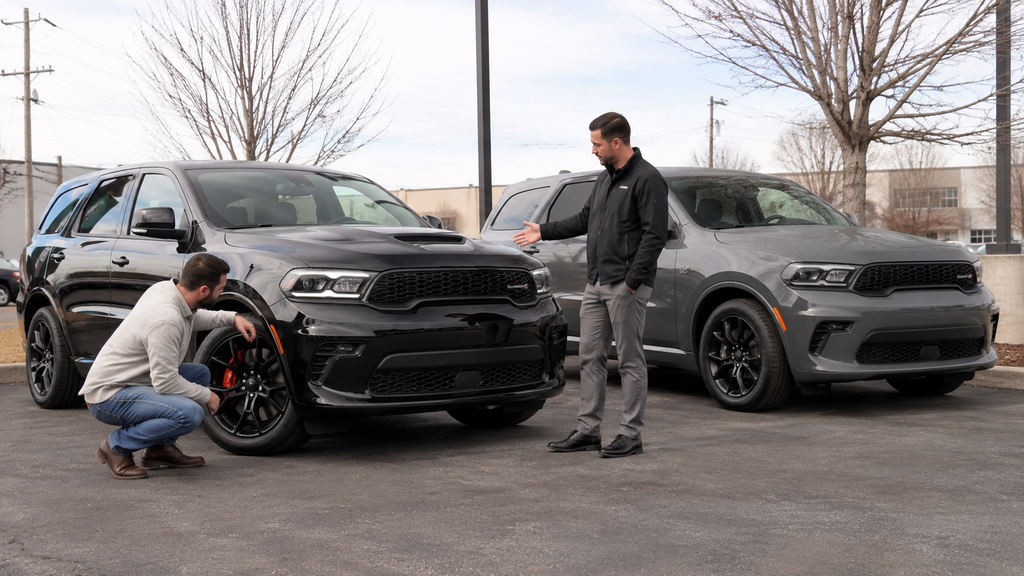
A 2026 Dodge Durango R/T 392 for sale brings more than a larger HEMI engine to the Durango lineup. The 2026 R/T now carries a 6.4L 392 HEMI V8 with 475 horsepower and 470 lb ft of torque. That change gives the trim a much sharper identity than the previous R/T. However, the engine is only one part of the story. Dodge also changes the suspension, brakes, rear axle hardware, steering calibration, exhaust, and drivetrain setup. Those changes shape how the SUV launches, corners, stops, and handles trailer weight. Therefore, trim research should look beyond horsepower alone.

What Changed for the 2026 Durango R/T 392?

The 2026 Dodge Durango R/T 392 replaces the former R/T powertrain with a 6.4L 392 HEMI V8. That engine produces 475 horsepower and 470 lb ft of torque. Dodge pairs it with an eight speed automatic transmission and standard all wheel drive. As a result, the R/T 392 reaches 60 mph in a claimed 4.4 seconds.

So, what changed from the prior R/T? The biggest mechanical shift is the move away from the 5.7L HEMI. The 2025 R/T used that smaller V8 and produced 360 horsepower. The 2026 version adds 115 horsepower and 80 lb ft of torque. Therefore, acceleration changes far more than the familiar R/T badge may suggest.

Additionally, the transmission plays a major role. It responds to engine load, road grade, traction, and driver input when selecting gears. Moreover, paddle shifters give the driver direct gear control. In addition, the all wheel drive hardware can vary torque between the front and rear axles. That setup supports stronger launches while keeping four driven wheels available during normal road use.

R/T 392 vs GT and GT HEMI Powertrains

The current Durango range includes several very different engine choices under familiar trim names. A shopper may ask whether the R/T 392 is simply a faster GT HEMI. The direct answer is no. The engine jump is large, while the surrounding hardware also changes.

For this reason, start with the standard GT and its 3.6L Pentastar V6 with 295 horsepower. Dodge also offers a 5.7L HEMI V8 on certain GT configurations. Additionally, that engine produces 360 horsepower and 390 lb ft of torque. By contrast, the R/T 392 moves to 475 horsepower and 470 lb ft.

Consequently, those numbers change how each Durango responds to throttle input. The V6 favors smoother power delivery for regular road driving. The 5.7L HEMI adds stronger low speed pull and more V8 character. Moreover, the 392 adds another major step in output. Passing, merging, and accelerating with added weight all require less throttle travel.

However, horsepower should not stand alone during trim selection. The GT HEMI remains a strong V8 choice for shoppers who want towing strength without moving into the R/T 392. The R/T makes more sense when engine output and specialized chassis hardware carry equal weight in the decision.

What Changes Beyond the 392 HEMI?

The R/T 392 also changes suspension control, braking hardware, rear axle operation, steering calibration, and exhaust tuning. Each component has a specific job. Together, they shape how the Durango handles the extra engine output.

Moreover, adaptive dampers change how firmly the suspension controls wheel and body movement. Firmer control can reduce excess body motion during quick direction changes. Softer responses can preserve comfort when the road does not demand aggressive control. Therefore, the suspension can react differently as driving inputs change.

Additionally, the electronic limited slip rear axle manages torque across the rear wheels. When one rear tire has less grip, the axle can redirect more torque to the side with greater traction. This matters during hard acceleration and corner exit. Moreover, it supports cleaner power delivery from the 392 V8.

Beyond that, Brembo brakes add six piston front calipers and four piston rear calipers. Larger multi piston hardware spreads clamping force across the brake pads. That setup supports repeated deceleration with strong pedal response. In addition, the high flow exhaust changes how the 392 breathes and sounds.

A shopper asking what the R/T adds beyond horsepower should focus here. The trim pairs the larger engine with hardware that controls motion, traction, and stopping force.

Towing, Seating, and Fuel Use

The 2026 Dodge Durango R/T 392 can tow up to 8,700 pounds when properly equipped. That number is impressive, but it needs context. A GT HEMI with the Tow N Go package can also reach an 8,700 pound maximum.

Does that make the two trims equal for towing? No. The matching maximum rating does not erase their engine and chassis differences. The R/T 392 still brings 475 horsepower, adaptive dampers, Brembo brakes, and its electronic limited slip rear axle. By contrast, a properly equipped GT HEMI reaches the same published trailer ceiling through its own equipment package.

Moreover, trailer weight changes acceleration and braking demands. More engine torque can make merging with a loaded trailer feel less strained. Strong brake hardware supports the vehicle during repeated speed changes. However, owners must still follow payload, tongue weight, hitch, and trailer limits for the exact configuration.

In addition, cabin layout deserves attention. Current R/T 392 versions use second row captain's chairs, creating seating for six. That layout gives second row passengers separate seats and a center pass through. Therefore, families should compare seating needs alongside engine output.

Finally, fuel use is another clear tradeoff. A larger 6.4L V8 consumes more fuel than the V6 during similar driving. Shoppers should weigh that cost against the stronger engine and specialized chassis hardware.

Comparing the Durango Configurations

Choosing among current Durango trims works best when each mechanical difference connects to a clear driving priority. Start with the engine, then move through braking, suspension, towing, seating, and fuel use. That order keeps the comparison grounded in hardware.

For regular commuting and family transportation, the V6 GT may provide enough power with lower fuel demand. Drivers wanting a V8 can also look at GT HEMI configurations. Those versions add the sound and torque of the 5.7L engine without requiring the R/T 392.

The R/T 392 serves a different priority set. It combines the 6.4L HEMI with adaptive dampers, Brembo brakes, active all wheel drive, and a limited slip rear axle. Consequently, the trim changes acceleration, chassis response, and braking hardware together.

Before choosing, ask how much value you place on the 392 engine itself. Then consider whether the suspension and brake upgrades match how you plan to drive. Towing needs also deserve a separate check because GT HEMI Tow N Go can reach the same published maximum.

A 2026 Dodge Durango R/T 392 for sale makes the strongest case when those mechanical changes matter together. For other shoppers, a GT or GT HEMI may cover the same passenger and trailer needs with a different powertrain.
Posted in:

Recommended Posts

Jeep Service Near Me for Louisiana Hurricane Season

Jeep Service Near Me for Louisiana Hurricane Season

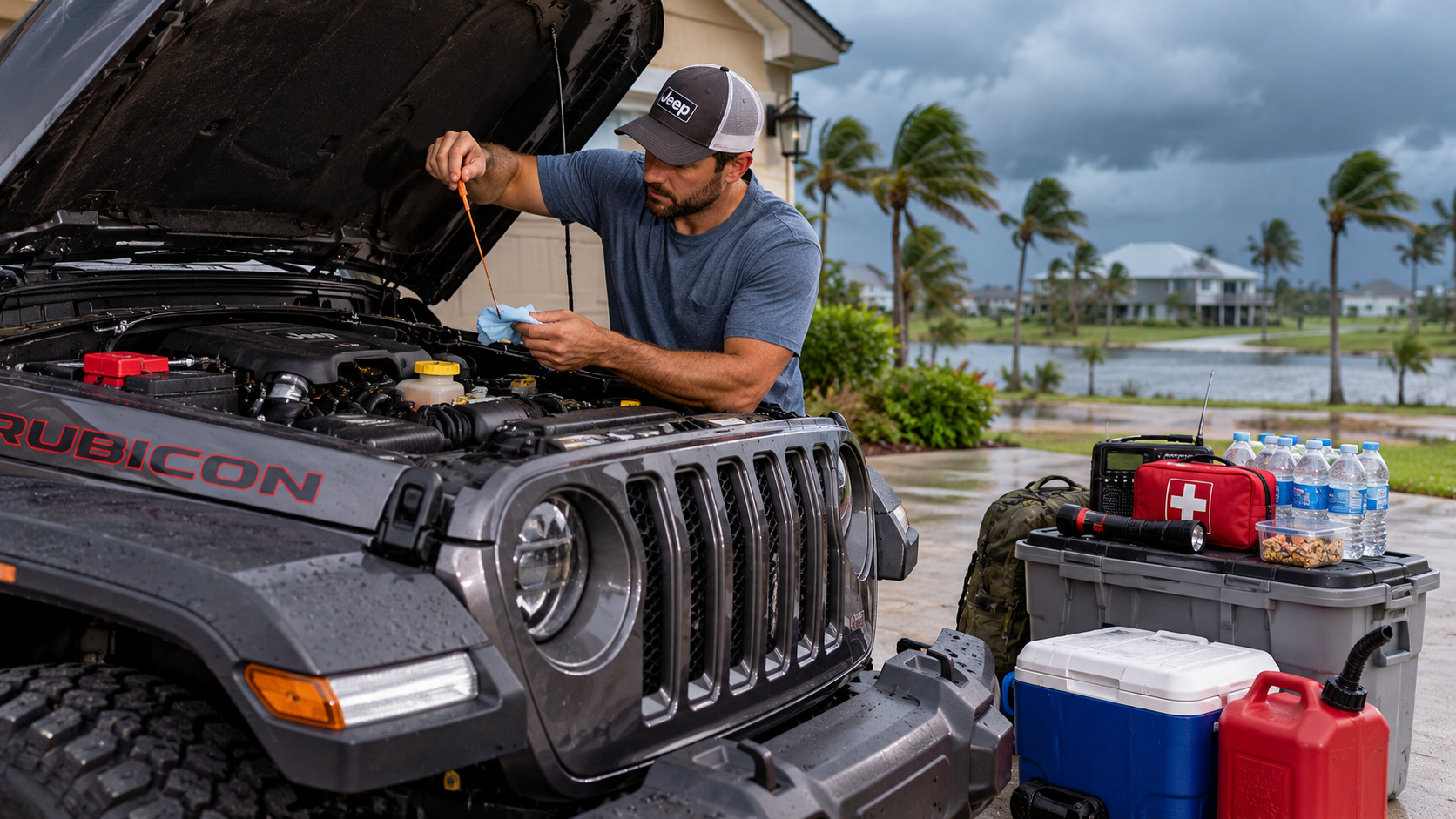
Jeep service near me becomes more relevant before Louisiana hurricane season when your vehicle may need to support evacuation travel. A storm can turn routine driving into longer trips, heavier rain, and slower traffic. Therefore, early vehicle checks give you time to address weak parts before travel becomes urgent. Start with the battery, tires, brakes, wipers, lights, fluids, and emergency supplies. Start With Battery and Starting Readiness What should you check first before hurricane season? Begin with the battery because every evacuation plan depends on the vehicle starting when needed. Therefore, a pre storm inspection should look beyond whether the engine starts today. A technician can inspect the battery case, terminals, and connections for visible trouble. In addition, testing can show whether the battery still has enough reserve for repeated starts and electrical demand. Heat can also be hard on batteries in Louisiana, so age and recent starting changes deserve attention. Additionally, watch for slower cranking, dim lights at startup, or warning messages. These signs do not prove the battery is failing, but they give a technician useful clues. Therefore, mention them when scheduling Jeep service near me before storm season. Ross Downing CDJR offers battery checks and replacement through its service department. You can use the service department to review available maintenance before a storm approaches. Before leaving for a longer trip, confirm three battery basics: Ask for a battery test if the battery is older or the engine has started more slowly. Check that terminals are secure and free of heavy corrosion before travel. Confirm that dashboard warning messages are addressed before relying on the vehicle for evacuation. Therefore, battery readiness should be handled early, not after a storm forecast creates a rush. Check Tires Brakes Wipers and Lights for Heavy Rain Are your tires and brakes ready for storm travel? They should be inspected as a group because wet roads place more demand on traction, stopping, and visibility. Therefore, tire pressure alone is not enough. Start with tread depth and visible damage. Look for cuts, bulges, uneven wear, or a tire that loses pressure between checks. In addition, confirm the cold tire pressure listed for your Jeep, Ram, Dodge, or Chrysler model. Furthermore, brakes deserve the same attention. Listen for grinding, squealing, or other new sounds. Also note vibration, longer stopping distance, or a pedal that feels different from normal. In addition, wipers and exterior lights matter because heavy rain can reduce visibility for everyone on the road. Replace blades that streak or skip. Then verify headlights, brake lights, turn signals, and hazard lights. A wet road inspection should include these items: Confirm usable tread depth and correct cold tire pressure before longer travel. Check brake response and address new sounds or vibration before storm traffic increases. Replace worn wiper blades and verify exterior lights before heavy rain arrives. Ross Downing CDJR lists tire, brake, and wiper service among its maintenance offerings. Therefore, one visit can cover several storm related checks at the same time. Review Fluids and Due Maintenance Before Evacuation Travel Which fluids and maintenance items should you review before a storm? Start with anything already due soon, then check the fluids tied to engine cooling, visibility, and longer travel. Therefore, engine oil should be within the correct service interval. Coolant should be at the proper level for the vehicle. Washer fluid should also be full enough for road spray and heavy rain. In addition, review any warning lights before travel. A warning that seems minor during a short commute can become harder to manage during a longer evacuation route. Jeep service near me can also be useful when you are unsure which maintenance items are due. A service advisor can review the vehicle history and identify items that should be handled before longer travel. Keep the pre storm review focused on work that supports the trip: Confirm oil service and other scheduled maintenance before the evacuation window. Check coolant, washer fluid, and other owner service items listed for your model. Address leaks or warning lights before planning a long drive. If a replacement part is needed, use the Mopar parts department. Moreover, that gives owners a direct parts path for their Chrysler, Dodge, Jeep, or Ram. Build a Louisiana Hurricane Vehicle Kit What should stay inside the vehicle during hurricane season? The kit should support basic needs if traffic slows, routes change, or travel takes longer than planned. Louisiana emergency guidance includes water, food, flashlights, spare batteries, first aid supplies, medications, identification, and rain gear. Therefore, a vehicle kit should start with those essentials and then reflect your household. Keep water and shelf stable food where they are easy to reach. Add a flashlight, charging cables, a battery powered radio, and a basic first aid kit. In addition, pack needed medications, copies of identification, and rain gear. Families may need diapers, child supplies, or extra clothing. Pet owners should add water, food, a leash, and other pet supplies. Therefore, the kit should match the people and animals who may travel with you. Additionally, fuel planning also matters. Fill the tank before local demand rises. Then keep your phone charged and review evacuation routes before leaving. Still, no amount of vehicle preparation makes floodwater safe. Never drive into a flooded roadway. Turn around and use another route. Schedule CDJR Service Before Storm Preparation Becomes Urgent When should you schedule service before a storm? Schedule early enough to leave time for testing, parts, and repairs before travel pressure rises. Therefore, the best window is before a named storm creates a local rush. Furthermore, tell the service advisor that you are preparing for hurricane season. Ask for a review of the battery, tires, brakes, wipers, lights, and due maintenance. In addition, mention any warning lights, leaks, or starting changes you have noticed. Ross Downing CDJR provides service information for Chrysler, Dodge, Jeep, and Ram owners. The dealership also supports Mopar parts needs when a replacement item is required. Jeep service near me should make storm preparation easier to organize, not more confusing. Start with the mechanical items that can stop a trip before it starts. Then prepare the cabin with emergency supplies and keep fuel, routes, and contact plans ready. A hurricane plan works best when the vehicle is ready before the forecast becomes urgent. Check the battery, tires, brakes, wipers, lights, fluids, and supplies early. Then use service and parts support to address anything that needs attention before you travel.

2026 Ram 1500 HEMI for Sale Near Me Ownership Guide

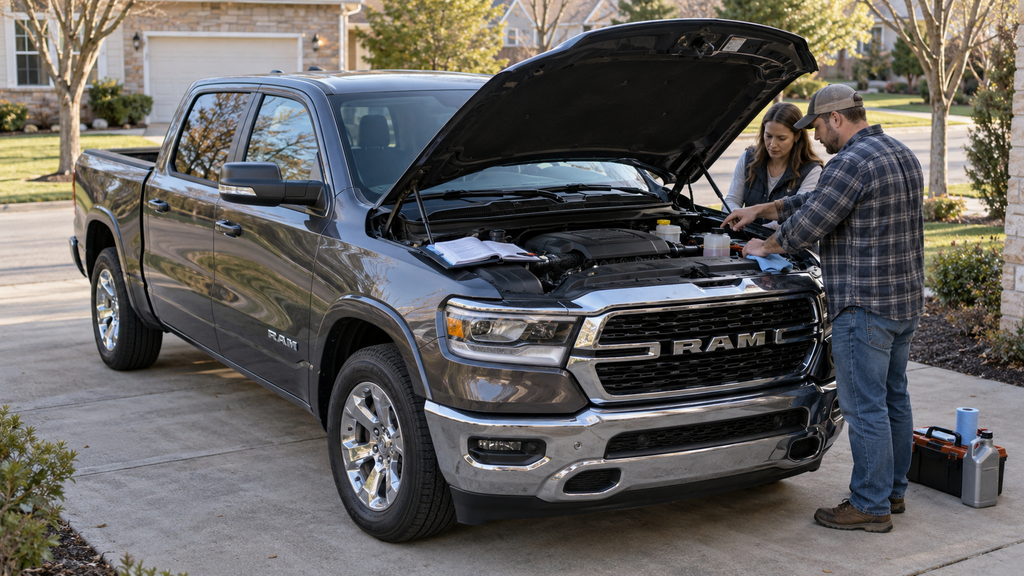
A 2026 Ram 1500 HEMI for sale near me comes with a service routine that starts soon after delivery. Your truck tracks oil life, mileage, and service messages while you drive. Therefore, the first months are less about guessing and more about watching the information Ram provides. Tire rotation, filter checks, brake inspections, and other service points arrive later. In addition, towing or frequent four wheel drive use can change how closely certain components deserve attention. Knowing those early checkpoints makes the first year easier to plan. How Does Your New Ram Know When Service Is Due? The 2026 Ram 1500 uses dashboard monitoring and scheduled mileage points to guide routine service. The oil change indicator is one of the first tools you will use. It tracks engine operation and alerts you when an oil change is required. So, does every new Ram need its first oil change at the same mileage? No. The oil change indicator responds to how the truck is operated. Therefore, two trucks with similar odometer readings may reach an oil service message at different times. Your instrument cluster gives you access to oil life information before the warning appears. Checking that screen periodically gives you a clearer idea of when service is approaching. In addition, the owner's information recommends completing oil service after the required message appears. more Oil is only one part of early truck care. Fluid levels, tire pressure, tread condition, exterior lights, and visible leaks deserve regular attention. These checks take little time and can reveal something before the next scheduled appointment. Moreover, the first few months give you time to learn how your Ram responds during normal driving. Pay attention to new noises, steering changes, braking feel, or warning messages. When something feels different, recording when it started gives a technician useful context. Early Maintenance Milestones The first year does not require you to memorize the entire maintenance schedule. Instead, focus on the earliest mileage points and the messages shown by the truck. Ram lists tire rotation at 10,000 mile intervals, with earlier rotation possible when tread differences reach the stated limit. Rotation moves tires between positions to spread wear more evenly. Therefore, the tread pattern across all four tires should remain part of every early service review. At 12,000 miles, the cabin air filter reaches an inspection point. This filter cleans incoming cabin air before it moves through the climate controls. Dust, pollen, and debris collect in the filter media as air passes through it. The 15,000 mile interval introduces several chassis inspections. Front suspension parts and tie rod ends receive attention at this stage. Brake linings also receive an inspection. In addition, technicians can look for wear or damage that may not produce a dashboard warning. By 30,000 miles, the engine air cleaner reaches its listed replacement point. Clean intake air supports proper engine operation by limiting dirt entering the intake path. These early milestones create a simple sequence: Around 10,000 miles, review tire rotation needs and tread wear. Around 12,000 miles, have the cabin air filter inspected. Around 15,000 miles, inspect brake linings, front suspension parts, and tie rod ends. Around 30,000 miles, address the engine air cleaner and listed drivetrain inspections. Your oil change message may appear between those mileage points. Therefore, oil service should follow the truck's indicator instead of waiting for another scheduled item. Does Towing Change Your Maintenance Plan? Frequent towing places added load on drivetrain, axle, brake, and cooling components that require closer inspection. Pulling a trailer asks the truck to move more total weight from a stop. It also asks the brakes to slow more total mass. For that reason, towing should be part of every service conversation. Tell the technician how frequently you tow and what type of trailer you pull. Trailer weight, trip length, terrain, and frequency all give useful context. Axle components receive specific attention in Ram's maintenance information. Frequent trailer towing or demanding driving can call for closer review of axle fluid and related components. Four wheel drive use can also bring transfer case service into the plan. Off pavement travel deserves similar attention. Mud, water, dust, and rough surfaces can place extra demand on tires, suspension parts, seals, and underbody components. Therefore, a truck that spends weekends on rough property roads may need closer visual inspection than a pavement only truck. Brakes also deserve careful review when trailers are part of the routine. More mass means the truck and trailer must dissipate more energy while slowing. Trailer brakes handle part of that work when properly equipped, but the truck's brakes still remain central. Before a long towing trip, check tire pressure, tire condition, lights, hitch hardware, fluid levels, and trailer connections. These checks support preparation before mileage alone triggers the next service point. What Your 2026 Ram Warranty Covers Warranty coverage starts when you take delivery, but different coverage periods apply to different parts of the truck. Therefore, it helps to separate the basic limited warranty from powertrain coverage. The current Ram and Mopar information lists a 3 year or 36,000 mile basic limited warranty. That coverage applies to qualifying repairs tied to defects covered under the warranty terms. Exact exclusions and requirements remain in the official warranty information supplied with the truck. Ram also offers a powertrain limited warranty extension for qualifying original owners of eligible 2026 vehicles. That extension reaches 10 years or 100,000 miles for covered powertrain parts. Does every future owner receive the full 10 year extension? No. The extension carries eligibility rules tied to qualifying vehicles and original ownership. Therefore, you should verify your specific truck and coverage status through official Ram or Mopar resources. Powertrain coverage also should not be treated as a replacement for every other warranty. Different components can fall under different terms. In addition, routine maintenance and wear items follow separate rules. Keep service receipts and maintenance records from the beginning. Good records show when work was completed and what the truck received. They also make later service conversations easier because dates and mileage remain easy to verify. Building a Service Routine After Purchase A reliable service routine does not need to be complicated. Start with dashboard messages, then pair them with the mileage points in your owner's information. Finally, keep a record each time service is completed. Ram provides digital owner resources where you can review vehicle information, warranty details, and maintenance history. These tools give you another place to track upcoming needs beside the instrument cluster. Your dealership service records can also create continuity between visits. A technician who can review earlier tire rotations, inspections, oil changes, and filter work has more context during the next appointment. Before each visit, write down anything you noticed while driving. A noise that appears only when turning, braking, towing, or starting cold gives the service team a clearer starting point. In addition, note any warning message before clearing it. The first months with a new Ram set the pattern for the years ahead. Watch the oil life display, follow the early mileage checkpoints, and adjust service attention to how you use the truck. A 2026 Ram 1500 HEMI for sale near me brings serious truck hardware, but good care still starts with simple habits. Keep the schedule visible, keep records organized, and give each service visit the context your truck has earned on the road.

Used Car Financing in Louisiana and Fair Trade In Values

Used Car Financing in Louisiana and Fair Trade In Values

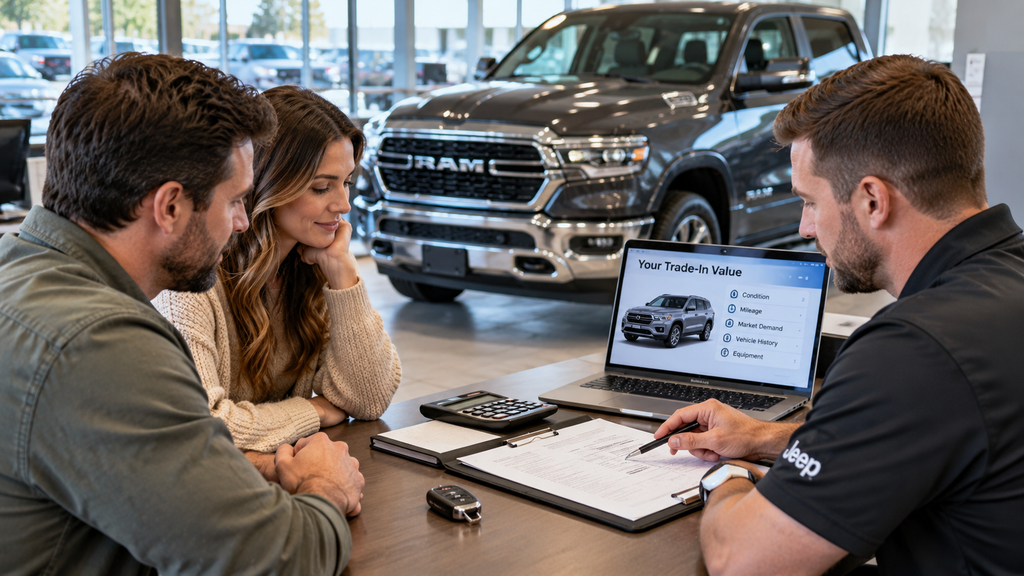
Used car financing in Louisiana becomes easier to review when the trade value and loan payoff remain separate. A clear appraisal gives you the vehicle value before financing starts. Therefore, you can see how equity changes the next loan amount. You can also compare the appraisal with outside research without mixing unrelated numbers. How a Trade Appraisal Establishes Vehicle Value How does a dealership establish a trade in value? A trade appraisal reviews the exact vehicle, its condition, mileage, equipment, and current market data. Therefore, the appraiser starts with the VIN, trim, and odometer before inspecting the vehicle itself. Mileage gives the appraiser one reference point. However, condition can move the number in either direction. Paint damage, worn tires, warning lights, interior wear, and mechanical concerns can all require reconditioning before resale. Installed equipment also matters because two vehicles from the same model year may not share the same specification. In addition, local demand can change what similar vehicles are bringing in the region. Used car financing in Louisiana should begin with a trade value that stands on its own. The appraisal should not change simply because the payoff is high or low. Instead, the vehicle value should come from the vehicle and the market around it. Before the appraisal, gather the details that define the vehicle: more Confirm the VIN, trim, mileage, major factory equipment, and any later modifications before the inspection begins. Point out known mechanical or cosmetic concerns so the appraiser can review them directly. Bring service records when they document recent maintenance, major repairs, or replacement parts. As a result, the appraisal has a clearer factual starting point. Why Online Estimates and Physical Appraisals Can Differ Why can an online estimate differ from an in person appraisal? Online tools rely on submitted details and market data, while the physical review checks the actual vehicle. An estimate may assume a certain condition level. However, an appraiser can see tire wear, body damage, interior wear, warning lights, or missing equipment. Those findings can change the final number. The reverse can also happen. A vehicle may show better condition than the owner expected. In addition, strong local demand can support a different market result than a broad online estimate. Used car financing in Louisiana works better when the online estimate serves as a reference point. It should not be treated as a guaranteed offer. Therefore, compare the assumptions behind each number. Check mileage, trim, options, condition, and location before deciding whether two figures truly conflict. Ross Downing CDJR offers a Value Your Vehicle tool for appraisal preparation. It asks for year, make, model, trim, mileage, payoff, options, and condition. A clear appraisal conversation should explain why the final number differs from an estimate. Therefore, you can judge the reasoning instead of focusing only on the difference. Separate Trade Value From Loan Payoff Does owing money on the vehicle reduce its trade value? No. The payoff changes your equity position, while the appraisal reflects what the vehicle is worth. The calculation is simple. Trade value minus current payoff equals your equity position. Therefore, a vehicle worth more than the payoff has positive equity. A vehicle worth less than the payoff has negative equity. This distinction matters during used car financing in Louisiana because equity changes the next amount financed. Positive equity can reduce the amount you need to borrow. Negative equity can increase it if the remaining balance enters the new contract. Review the numbers in this order: Start with the trade value before discussing the current loan balance. Verify the lender payoff using a current payoff amount instead of an old monthly statement. Subtract the payoff from the trade value to see the equity position before reviewing the next loan. Instead, avoid folding every figure into one monthly payment discussion. The trade amount, payoff, and next loan each answer a different question. If negative equity enters the next loan, the amount financed rises. As a result, interest may apply to a larger balance. Therefore, review that amount before choosing a term or monthly payment. Bring the Information That Supports a Clear Appraisal What should you bring before getting a trade appraisal? Bring the ownership and loan information that lets the dealership verify the vehicle and payoff. Registration can confirm ownership details. In addition, lender information gives the finance team a path to request the current payoff. A payoff quote matters because the balance can change as interest accrues or payments post. Service records can also add context. They do not guarantee a higher trade value. However, they can document recent maintenance, repairs, tires, or other work that the appraiser should know about. Used car financing in Louisiana may move faster when the trade information is complete before the finance discussion begins. Therefore, gather the following items before your appointment: Bring the current registration, lender name, account information, and any recent payoff quote you already have. Bring both key fobs, service records, and information about major repairs or modifications. Remove personal items so the cabin and cargo areas are ready for a complete inspection. Ross Downing CDJR also provides a finance center for customers reviewing loan options after the appraisal. Keeping the trade documents together makes the next step easier to review. Keep the Trade and Financing Numbers Separate What should a transparent trade conversation show you? It should show the appraisal, payoff, equity, purchase price, fees, and financing terms as separate figures. That separation makes the transaction easier to follow. Therefore, you can see whether a change came from the trade, the vehicle price, the loan structure, or another charge. Used car financing in Louisiana should not require you to reverse engineer the trade value from a monthly payment. Instead, ask to see the core numbers individually before discussing the final payment. Start with the trade amount. Then confirm the payoff and resulting equity. After that, review the next vehicle price, taxes, fees, down payment, amount financed, APR, and loan term. The monthly payment comes from those inputs. As a result, a lower payment can come from a longer term even when the amount financed stays high. Looking at every figure keeps the trade conversation focused on the actual appraisal. A fair process does not promise that every outside estimate will match the final offer. Instead, it gives you a clear explanation for the number and shows how that number enters the next transaction. Review the appraisal first, verify the payoff second, and examine financing after the equity position is clear.