





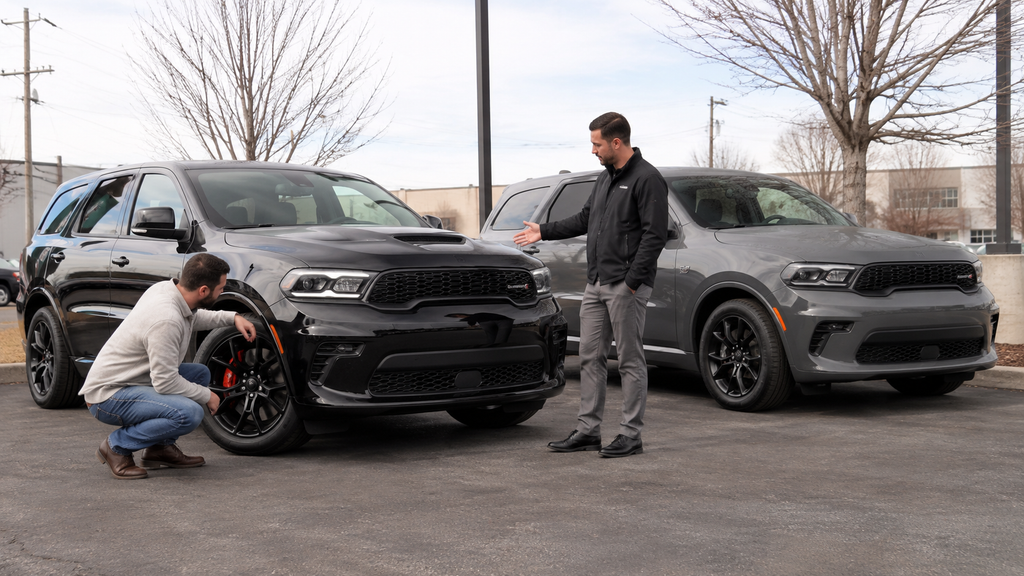
A 2026 Dodge Durango R/T 392 for sale brings more than a larger HEMI engine to the Durango lineup. The 2026 R/T now carries a 6.4L 392 HEMI V8 with 475 horsepower and 470 lb ft of torque. That change gives the trim a much sharper identity than the previous R/T. However, the engine is only one part of the story. Dodge also changes the suspension, brakes, rear axle hardware, steering calibration, exhaust, and drivetrain setup. Those changes shape how the SUV launches, corners, stops, and handles trailer weight. Therefore, trim research should look beyond horsepower alone.
What Changed for the 2026 Durango R/T 392?
The 2026 Dodge Durango R/T 392 replaces the former R/T powertrain with a 6.4L 392 HEMI V8. That engine produces 475 horsepower and 470 lb ft of torque. Dodge pairs it with an eight speed automatic transmission and standard all wheel drive. As a result, the R/T 392 reaches 60 mph in a claimed 4.4 seconds.
So, what changed from the prior R/T? The biggest mechanical shift is the move away from the 5.7L HEMI. The 2025 R/T used that smaller V8 and produced 360 horsepower. The 2026 version adds 115 horsepower and 80 lb ft of torque. Therefore, acceleration changes far more than the familiar R/T badge may suggest.
Additionally, the transmission plays a major role. It responds to engine load, road grade, traction, and driver input when selecting gears. Moreover, paddle shifters give the driver direct gear control. In addition, the all wheel drive hardware can vary torque between the front and rear axles. That setup supports stronger launches while keeping four driven wheels available during normal road use.
R/T 392 vs GT and GT HEMI Powertrains
The current Durango range includes several very different engine choices under familiar trim names. A shopper may ask whether the R/T 392 is simply a faster GT HEMI. The direct answer is no. The engine jump is large, while the surrounding hardware also changes.
For this reason, start with the standard GT and its 3.6L Pentastar V6 with 295 horsepower. Dodge also offers a 5.7L HEMI V8 on certain GT configurations. Additionally, that engine produces 360 horsepower and 390 lb ft of torque. By contrast, the R/T 392 moves to 475 horsepower and 470 lb ft.
Consequently, those numbers change how each Durango responds to throttle input. The V6 favors smoother power delivery for regular road driving. The 5.7L HEMI adds stronger low speed pull and more V8 character. Moreover, the 392 adds another major step in output. Passing, merging, and accelerating with added weight all require less throttle travel.
However, horsepower should not stand alone during trim selection. The GT HEMI remains a strong V8 choice for shoppers who want towing strength without moving into the R/T 392. The R/T makes more sense when engine output and specialized chassis hardware carry equal weight in the decision.
What Changes Beyond the 392 HEMI?
The R/T 392 also changes suspension control, braking hardware, rear axle operation, steering calibration, and exhaust tuning. Each component has a specific job. Together, they shape how the Durango handles the extra engine output.
Moreover, adaptive dampers change how firmly the suspension controls wheel and body movement. Firmer control can reduce excess body motion during quick direction changes. Softer responses can preserve comfort when the road does not demand aggressive control. Therefore, the suspension can react differently as driving inputs change.
Additionally, the electronic limited slip rear axle manages torque across the rear wheels. When one rear tire has less grip, the axle can redirect more torque to the side with greater traction. This matters during hard acceleration and corner exit. Moreover, it supports cleaner power delivery from the 392 V8.
Beyond that, Brembo brakes add six piston front calipers and four piston rear calipers. Larger multi piston hardware spreads clamping force across the brake pads. That setup supports repeated deceleration with strong pedal response. In addition, the high flow exhaust changes how the 392 breathes and sounds.
A shopper asking what the R/T adds beyond horsepower should focus here. The trim pairs the larger engine with hardware that controls motion, traction, and stopping force.
Towing, Seating, and Fuel Use
The 2026 Dodge Durango R/T 392 can tow up to 8,700 pounds when properly equipped. That number is impressive, but it needs context. A GT HEMI with the Tow N Go package can also reach an 8,700 pound maximum.
Does that make the two trims equal for towing? No. The matching maximum rating does not erase their engine and chassis differences. The R/T 392 still brings 475 horsepower, adaptive dampers, Brembo brakes, and its electronic limited slip rear axle. By contrast, a properly equipped GT HEMI reaches the same published trailer ceiling through its own equipment package.
Moreover, trailer weight changes acceleration and braking demands. More engine torque can make merging with a loaded trailer feel less strained. Strong brake hardware supports the vehicle during repeated speed changes. However, owners must still follow payload, tongue weight, hitch, and trailer limits for the exact configuration.
In addition, cabin layout deserves attention. Current R/T 392 versions use second row captain’s chairs, creating seating for six. That layout gives second row passengers separate seats and a center pass through. Therefore, families should compare seating needs alongside engine output.
Finally, fuel use is another clear tradeoff. A larger 6.4L V8 consumes more fuel than the V6 during similar driving. Shoppers should weigh that cost against the stronger engine and specialized chassis hardware.
Comparing the Durango Configurations
Choosing among current Durango trims works best when each mechanical difference connects to a clear driving priority. Start with the engine, then move through braking, suspension, towing, seating, and fuel use. That order keeps the comparison grounded in hardware.
For regular commuting and family transportation, the V6 GT may provide enough power with lower fuel demand. Drivers wanting a V8 can also look at GT HEMI configurations. Those versions add the sound and torque of the 5.7L engine without requiring the R/T 392.
The R/T 392 serves a different priority set. It combines the 6.4L HEMI with adaptive dampers, Brembo brakes, active all wheel drive, and a limited slip rear axle. Consequently, the trim changes acceleration, chassis response, and braking hardware together.
Before choosing, ask how much value you place on the 392 engine itself. Then consider whether the suspension and brake upgrades match how you plan to drive. Towing needs also deserve a separate check because GT HEMI Tow N Go can reach the same published maximum.
A 2026 Dodge Durango R/T 392 for sale makes the strongest case when those mechanical changes matter together. For other shoppers, a GT or GT HEMI may cover the same passenger and trailer needs with a different powertrain.
Connect with us

