





A 2026 Ram 1500 HEMI for sale near me comes with a service routine that starts soon after delivery. Your truck tracks oil life, mileage, and service messages while you drive. Therefore, the first months are less about guessing and more about watching the information Ram provides. Tire rotation, filter checks, brake inspections, and other service points arrive later. In addition, towing or frequent four wheel drive use can change how closely certain components deserve attention. Knowing those early checkpoints makes the first year easier to plan.
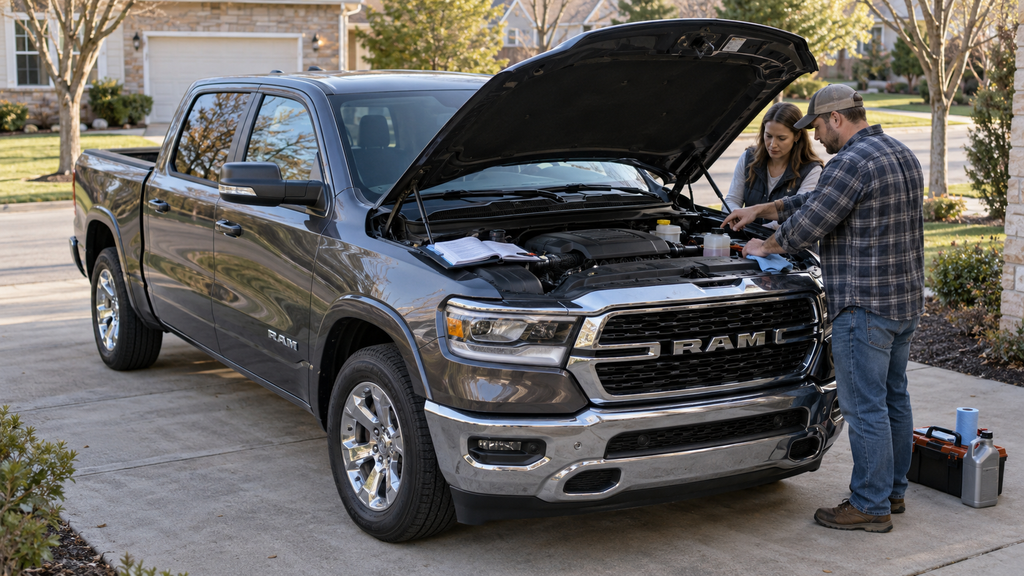
How Does Your New Ram Know When Service Is Due?
The 2026 Ram 1500 uses dashboard monitoring and scheduled mileage points to guide routine service. The oil change indicator is one of the first tools you will use. It tracks engine operation and alerts you when an oil change is required.
So, does every new Ram need its first oil change at the same mileage? No. The oil change indicator responds to how the truck is operated. Therefore, two trucks with similar odometer readings may reach an oil service message at different times.
Your instrument cluster gives you access to oil life information before the warning appears. Checking that screen periodically gives you a clearer idea of when service is approaching. In addition, the owner’s information recommends completing oil service after the required message appears.
Oil is only one part of early truck care. Fluid levels, tire pressure, tread condition, exterior lights, and visible leaks deserve regular attention. These checks take little time and can reveal something before the next scheduled appointment.
Moreover, the first few months give you time to learn how your Ram responds during normal driving. Pay attention to new noises, steering changes, braking feel, or warning messages. When something feels different, recording when it started gives a technician useful context.
Early Maintenance Milestones
The first year does not require you to memorize the entire maintenance schedule. Instead, focus on the earliest mileage points and the messages shown by the truck.
Ram lists tire rotation at 10,000 mile intervals, with earlier rotation possible when tread differences reach the stated limit. Rotation moves tires between positions to spread wear more evenly. Therefore, the tread pattern across all four tires should remain part of every early service review.
At 12,000 miles, the cabin air filter reaches an inspection point. This filter cleans incoming cabin air before it moves through the climate controls. Dust, pollen, and debris collect in the filter media as air passes through it.
The 15,000 mile interval introduces several chassis inspections. Front suspension parts and tie rod ends receive attention at this stage. Brake linings also receive an inspection. In addition, technicians can look for wear or damage that may not produce a dashboard warning.
By 30,000 miles, the engine air cleaner reaches its listed replacement point. Clean intake air supports proper engine operation by limiting dirt entering the intake path.
These early milestones create a simple sequence:
- Around 10,000 miles, review tire rotation needs and tread wear.
- Around 12,000 miles, have the cabin air filter inspected.
- Around 15,000 miles, inspect brake linings, front suspension parts, and tie rod ends.
- Around 30,000 miles, address the engine air cleaner and listed drivetrain inspections.
Your oil change message may appear between those mileage points. Therefore, oil service should follow the truck’s indicator instead of waiting for another scheduled item.
Does Towing Change Your Maintenance Plan?
Frequent towing places added load on drivetrain, axle, brake, and cooling components that require closer inspection. Pulling a trailer asks the truck to move more total weight from a stop. It also asks the brakes to slow more total mass.
For that reason, towing should be part of every service conversation. Tell the technician how frequently you tow and what type of trailer you pull. Trailer weight, trip length, terrain, and frequency all give useful context.
Axle components receive specific attention in Ram’s maintenance information. Frequent trailer towing or demanding driving can call for closer review of axle fluid and related components. Four wheel drive use can also bring transfer case service into the plan.
Off pavement travel deserves similar attention. Mud, water, dust, and rough surfaces can place extra demand on tires, suspension parts, seals, and underbody components. Therefore, a truck that spends weekends on rough property roads may need closer visual inspection than a pavement only truck.
Brakes also deserve careful review when trailers are part of the routine. More mass means the truck and trailer must dissipate more energy while slowing. Trailer brakes handle part of that work when properly equipped, but the truck’s brakes still remain central.
Before a long towing trip, check tire pressure, tire condition, lights, hitch hardware, fluid levels, and trailer connections. These checks support preparation before mileage alone triggers the next service point.
What Your 2026 Ram Warranty Covers
Warranty coverage starts when you take delivery, but different coverage periods apply to different parts of the truck. Therefore, it helps to separate the basic limited warranty from powertrain coverage.
The current Ram and Mopar information lists a 3 year or 36,000 mile basic limited warranty. That coverage applies to qualifying repairs tied to defects covered under the warranty terms. Exact exclusions and requirements remain in the official warranty information supplied with the truck.
Ram also offers a powertrain limited warranty extension for qualifying original owners of eligible 2026 vehicles. That extension reaches 10 years or 100,000 miles for covered powertrain parts.
Does every future owner receive the full 10 year extension? No. The extension carries eligibility rules tied to qualifying vehicles and original ownership. Therefore, you should verify your specific truck and coverage status through official Ram or Mopar resources.
Powertrain coverage also should not be treated as a replacement for every other warranty. Different components can fall under different terms. In addition, routine maintenance and wear items follow separate rules.
Keep service receipts and maintenance records from the beginning. Good records show when work was completed and what the truck received. They also make later service conversations easier because dates and mileage remain easy to verify.
Building a Service Routine After Purchase
A reliable service routine does not need to be complicated. Start with dashboard messages, then pair them with the mileage points in your owner’s information. Finally, keep a record each time service is completed.
Ram provides digital owner resources where you can review vehicle information, warranty details, and maintenance history. These tools give you another place to track upcoming needs beside the instrument cluster.
Your dealership service records can also create continuity between visits. A technician who can review earlier tire rotations, inspections, oil changes, and filter work has more context during the next appointment.
Before each visit, write down anything you noticed while driving. A noise that appears only when turning, braking, towing, or starting cold gives the service team a clearer starting point. In addition, note any warning message before clearing it.
The first months with a new Ram set the pattern for the years ahead. Watch the oil life display, follow the early mileage checkpoints, and adjust service attention to how you use the truck. A 2026 Ram 1500 HEMI for sale near me brings serious truck hardware, but good care still starts with simple habits. Keep the schedule visible, keep records organized, and give each service visit the context your truck has earned on the road.
Connect with us

